cares
deaf


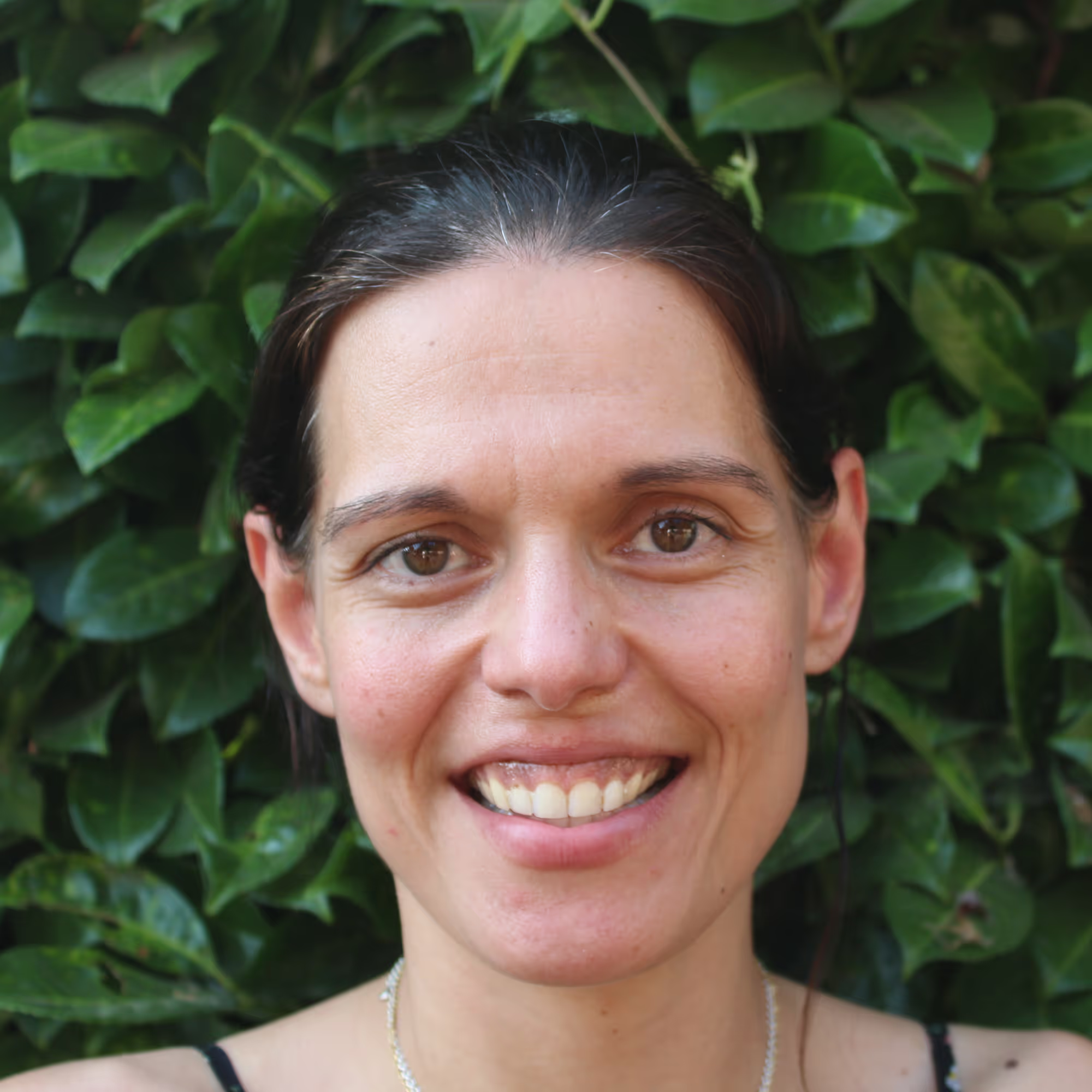
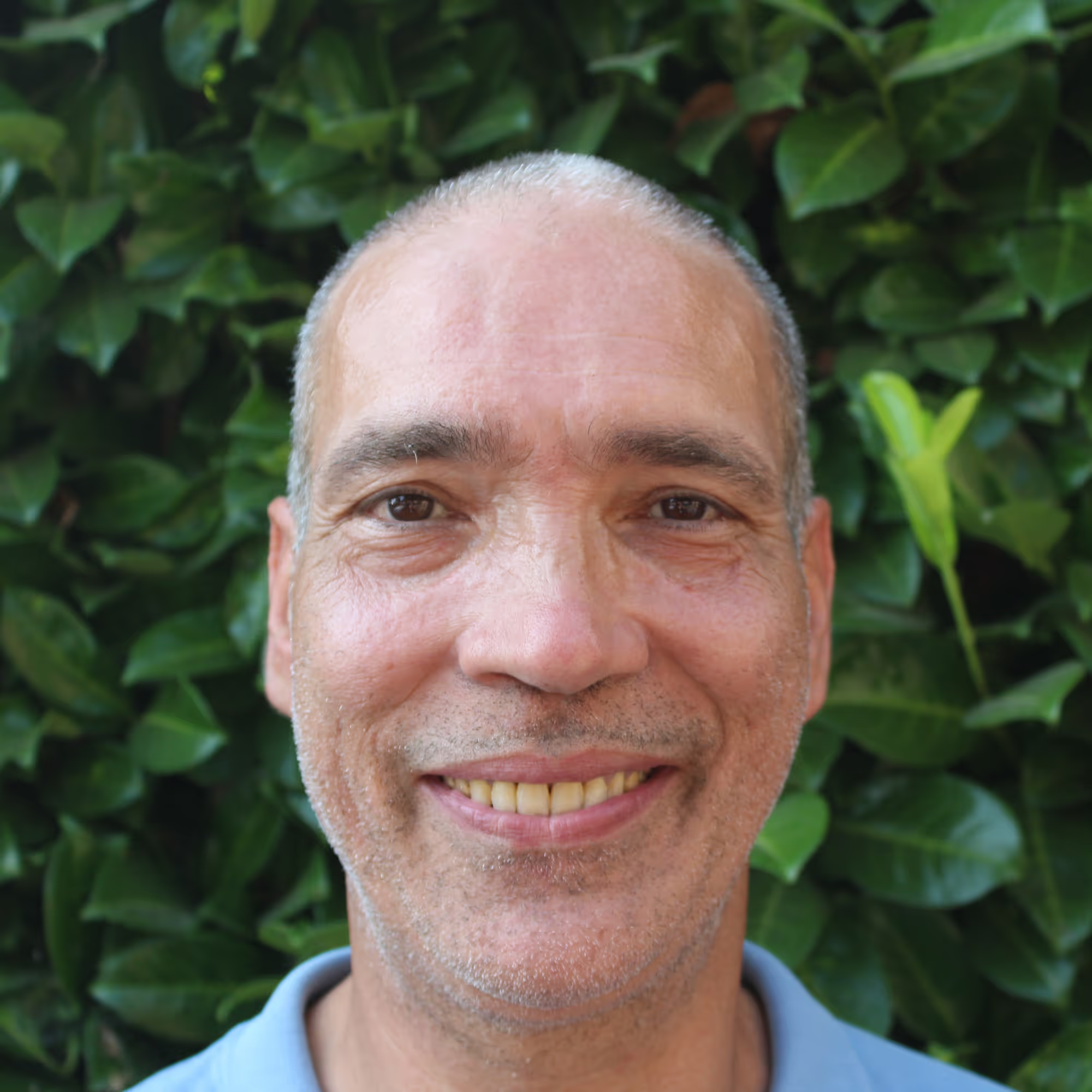
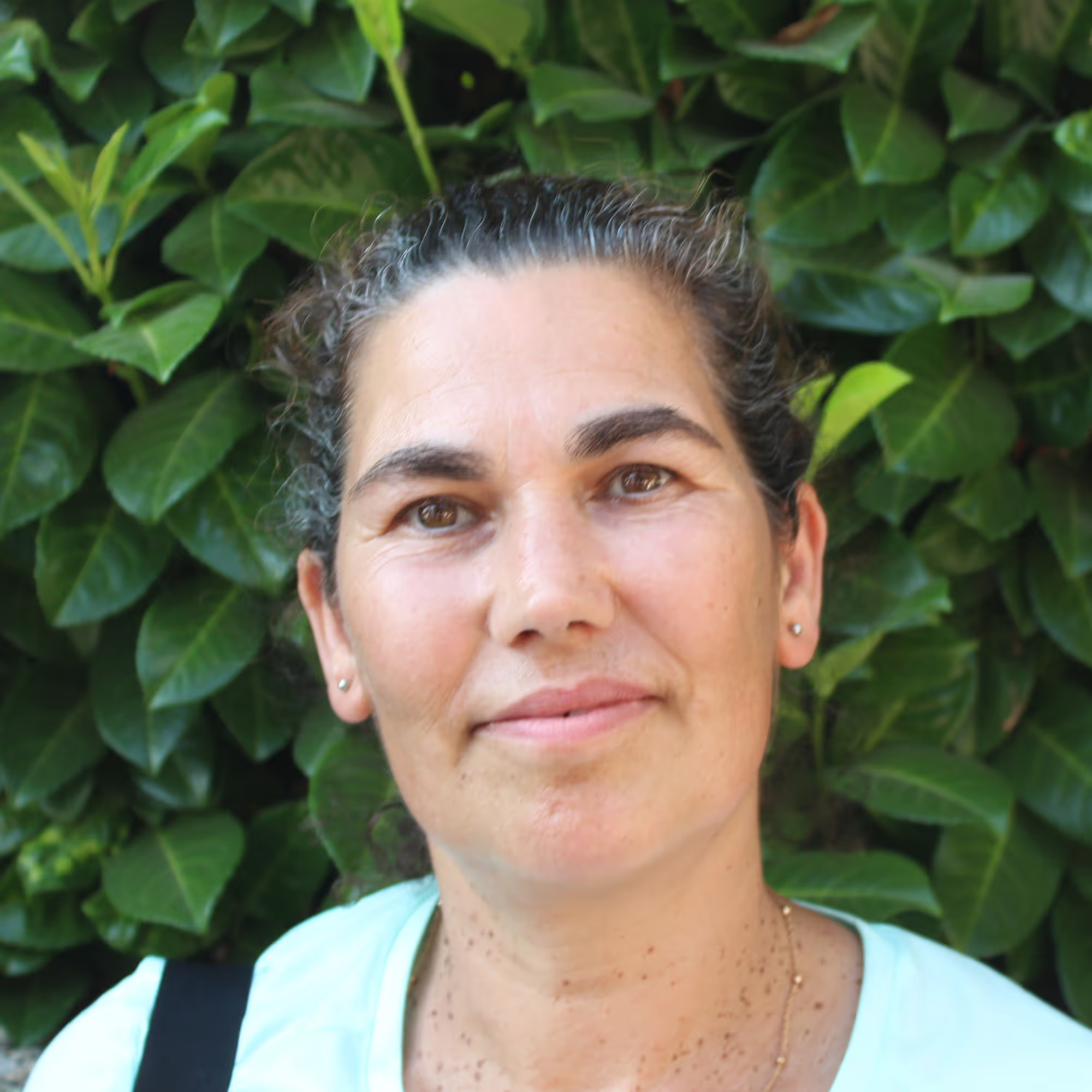
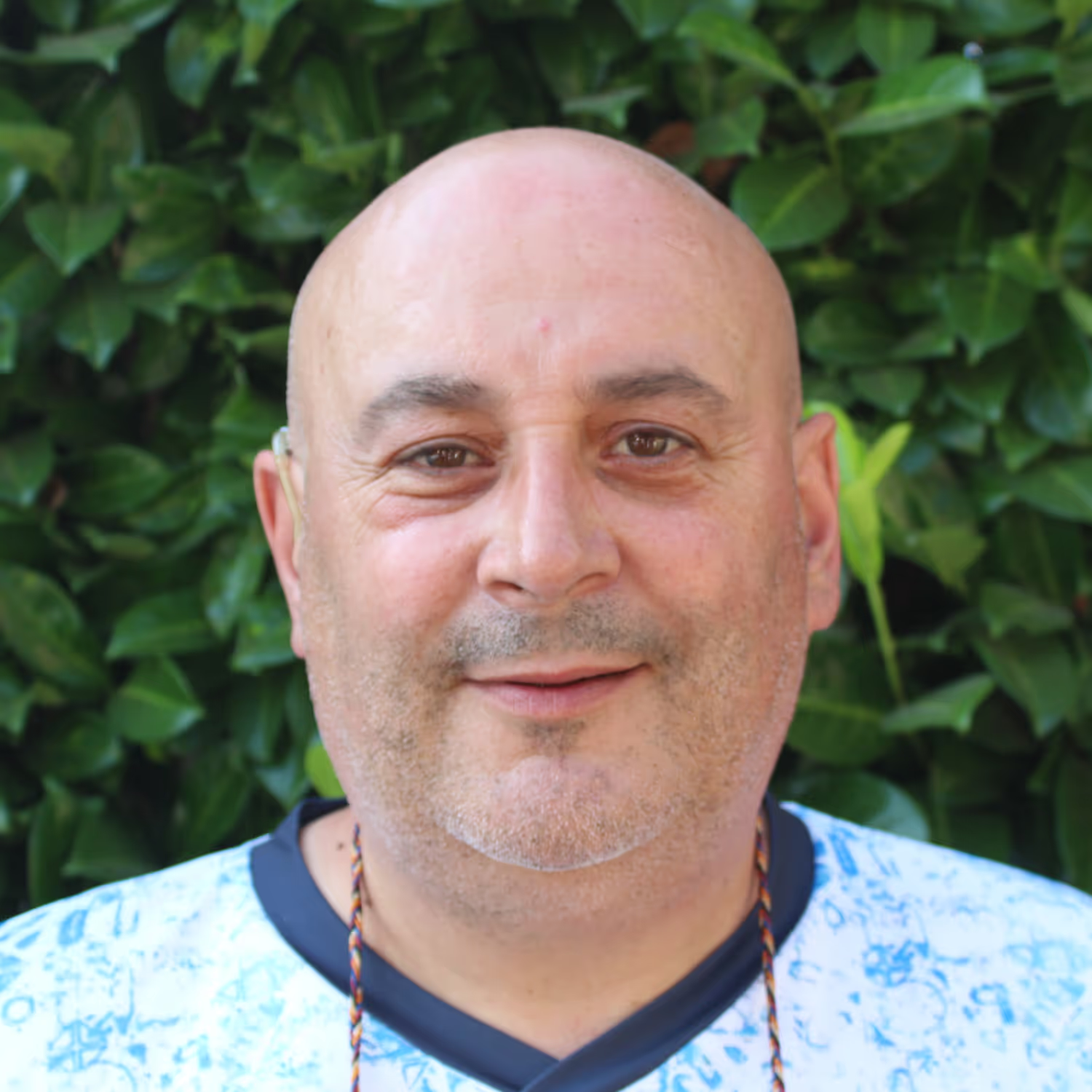
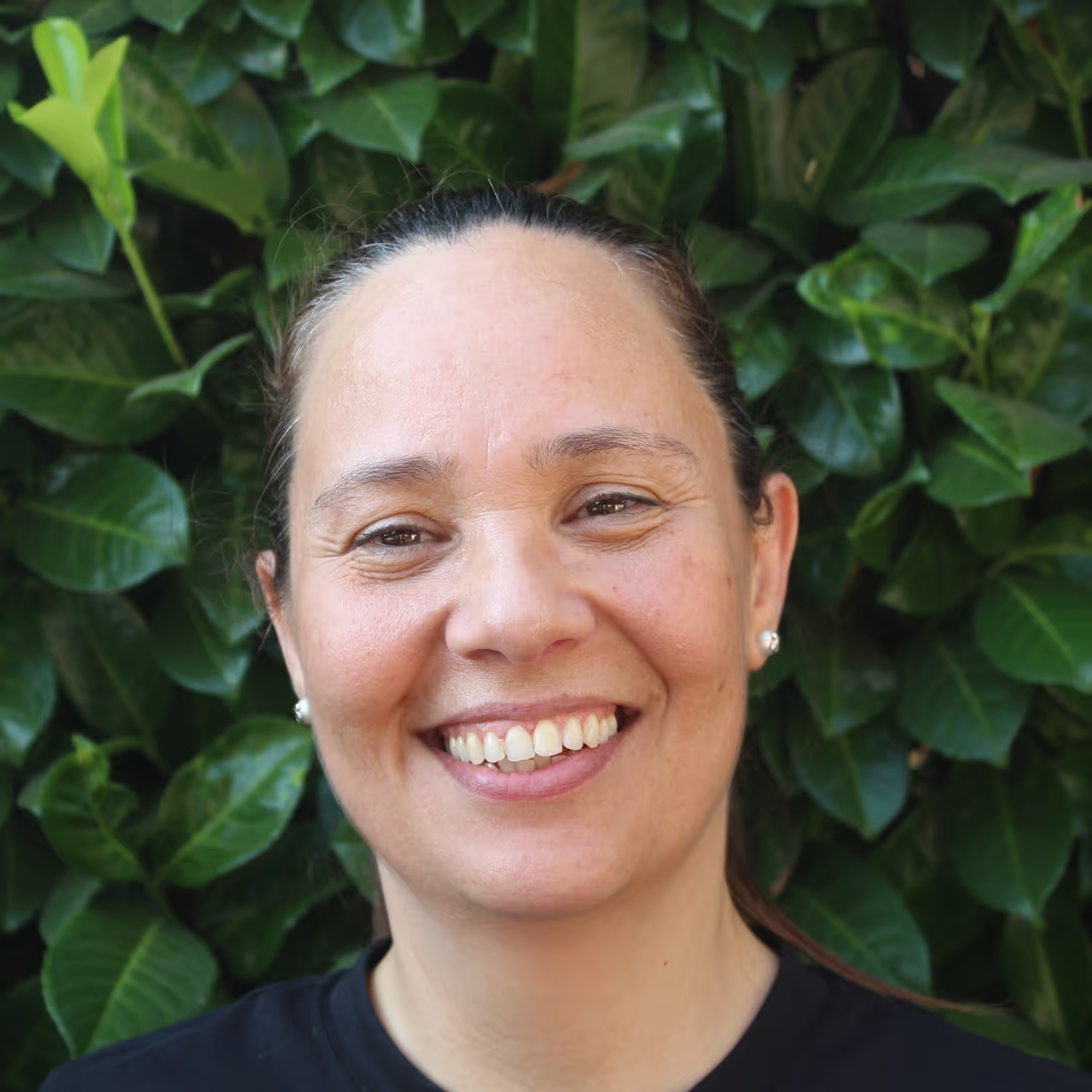
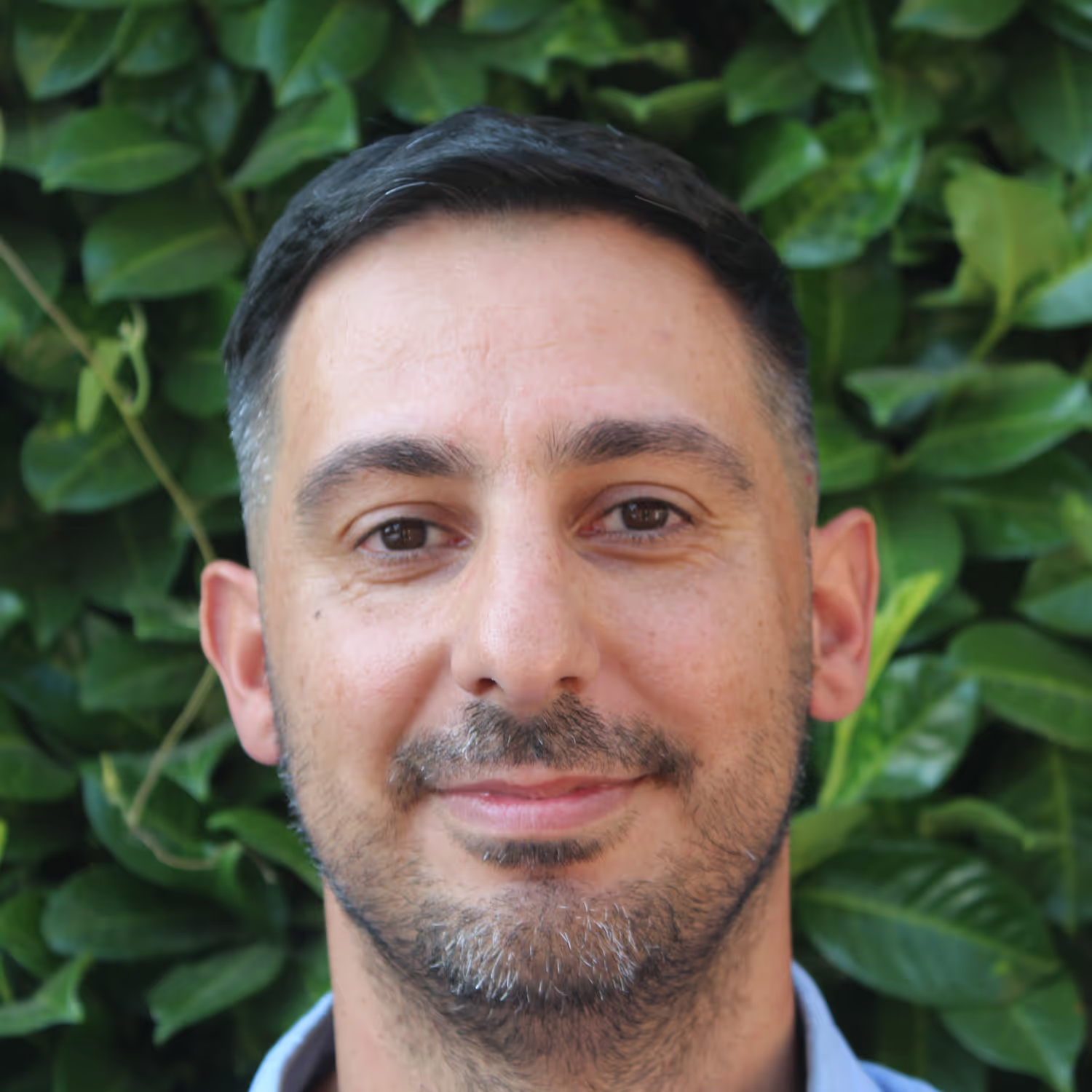
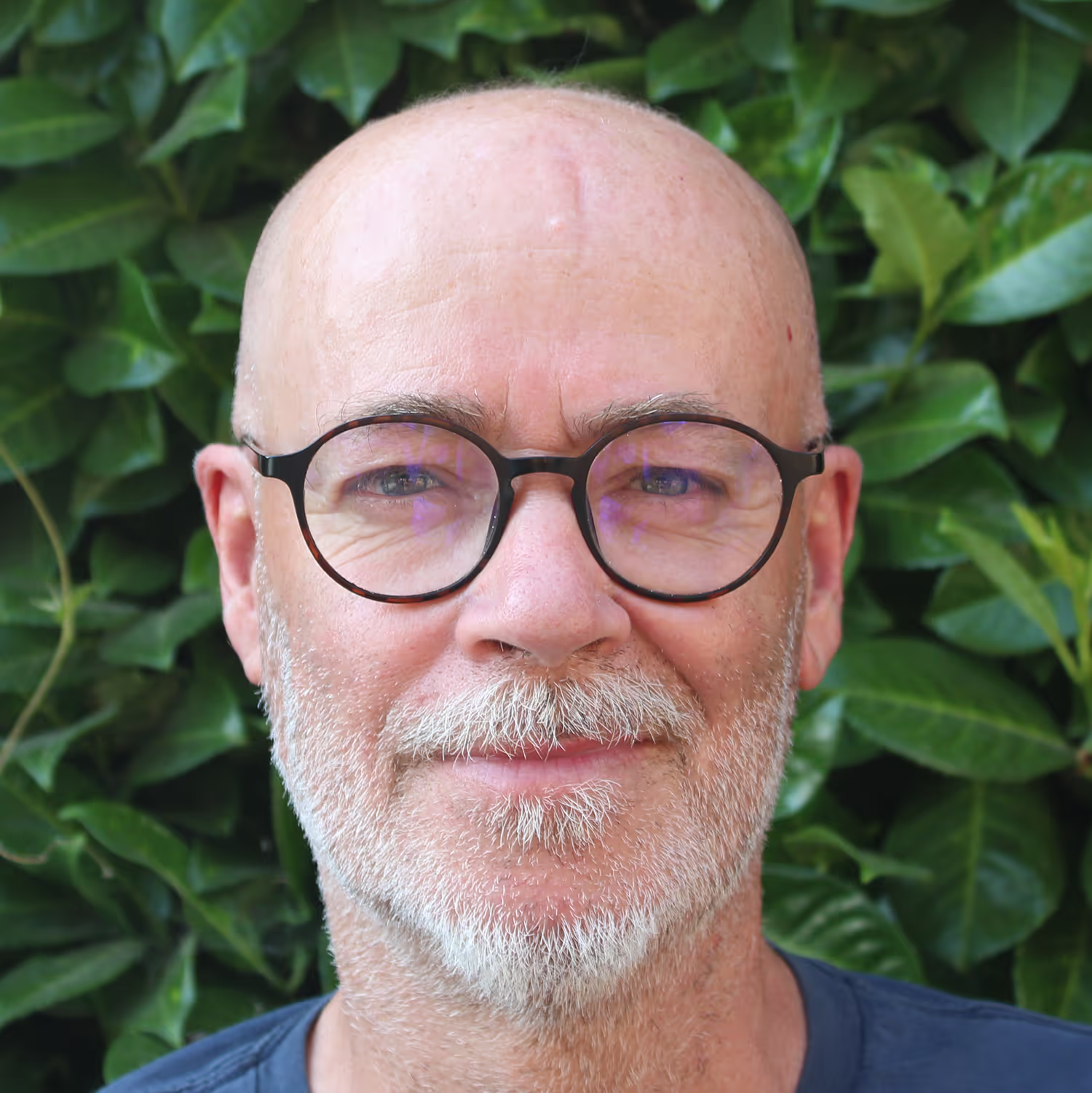
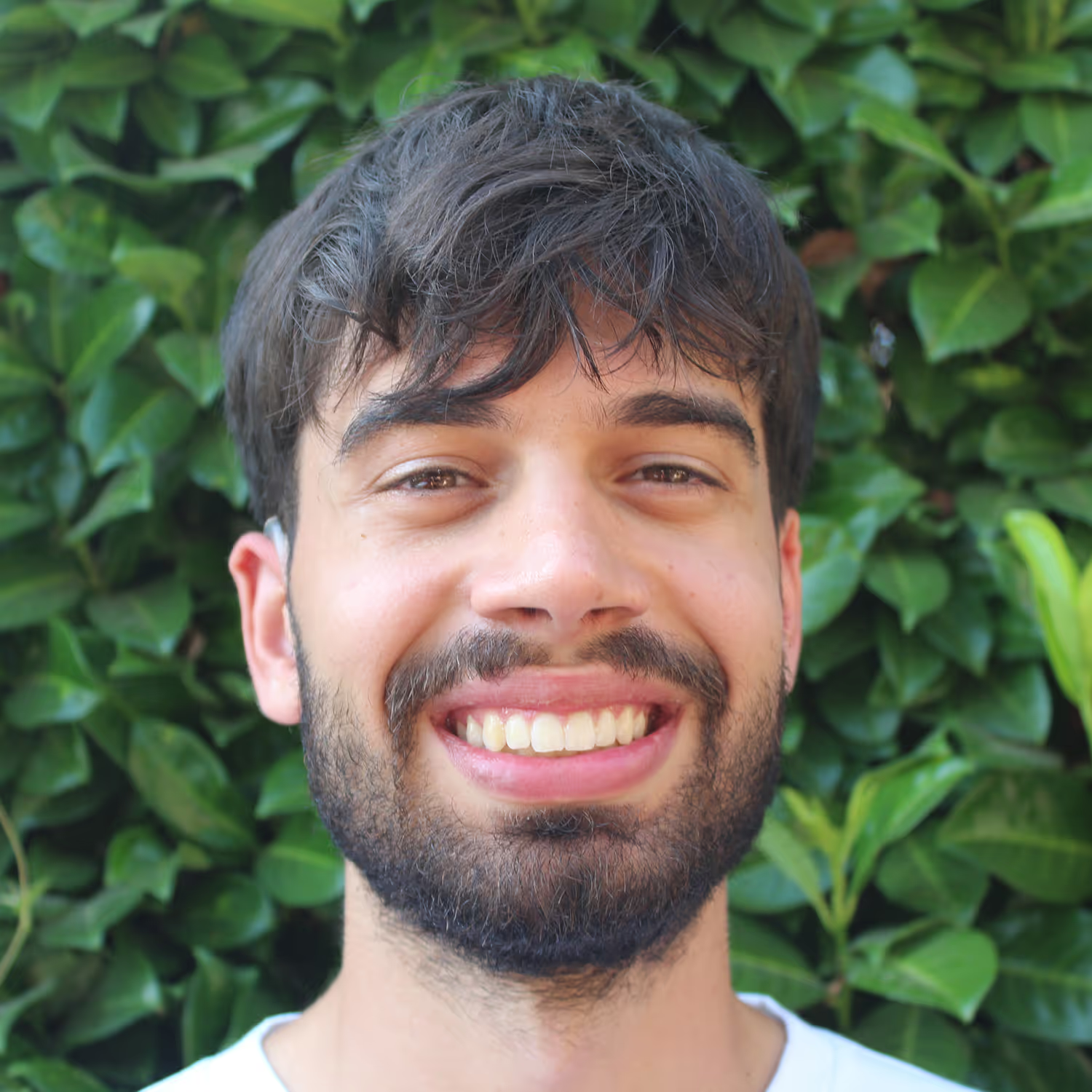
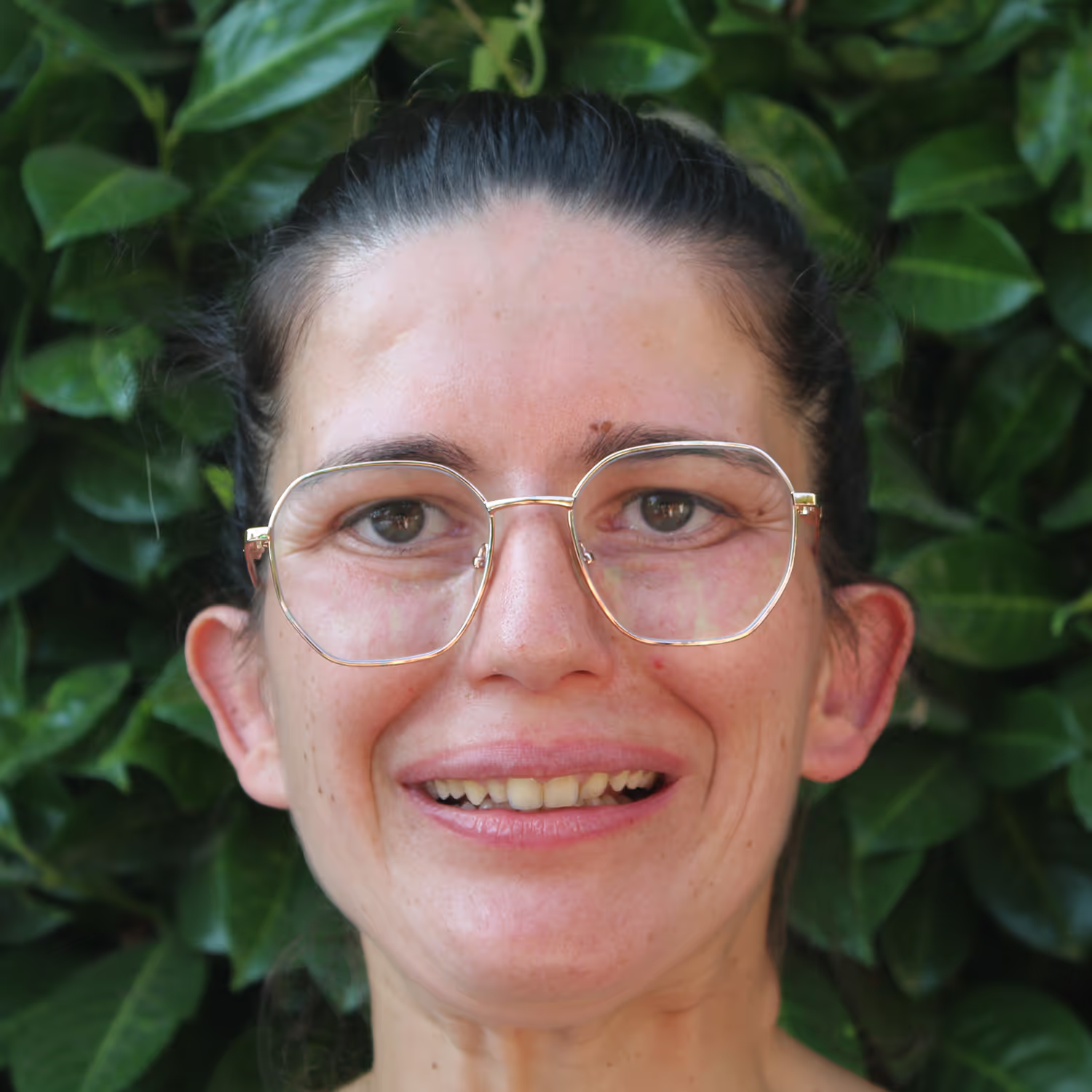
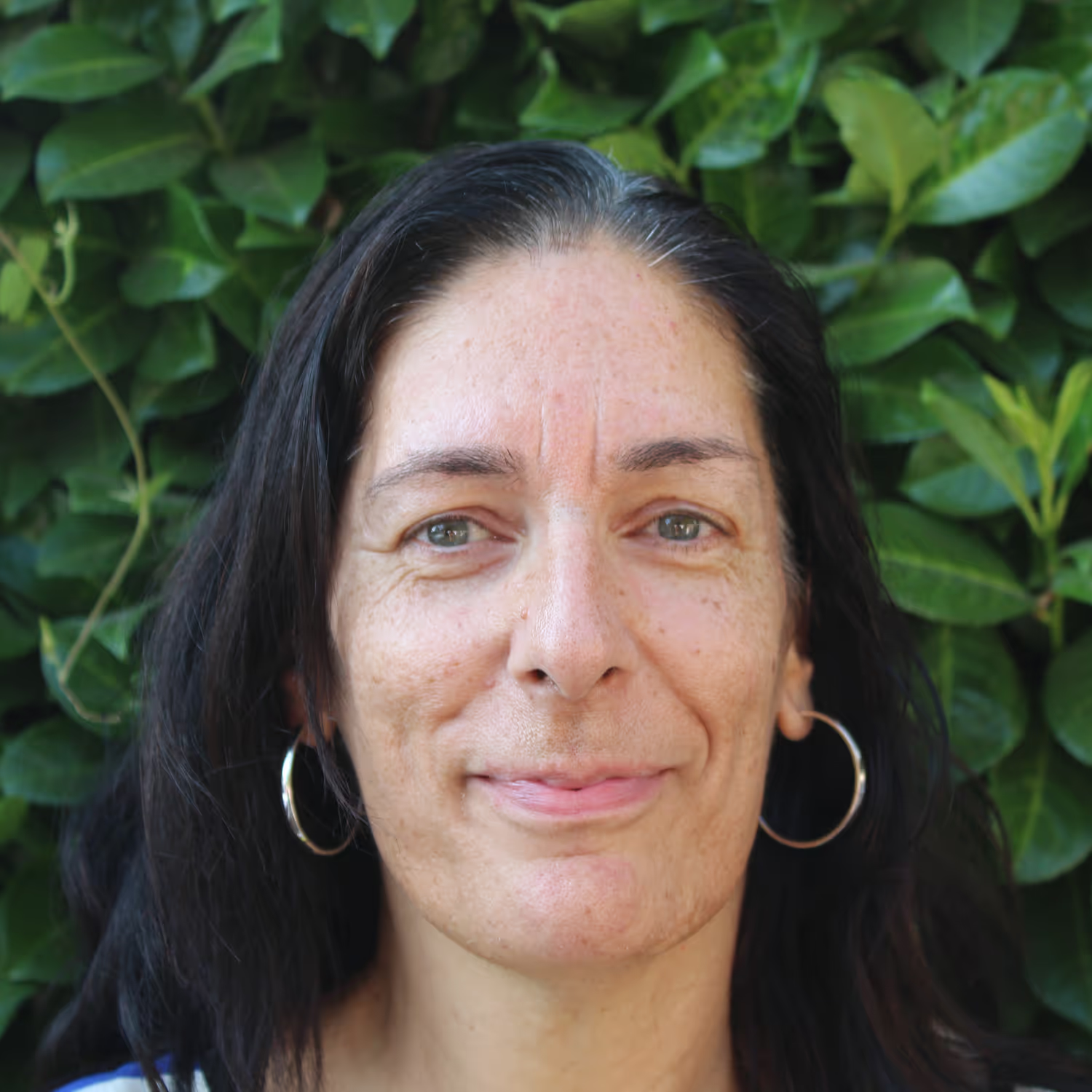
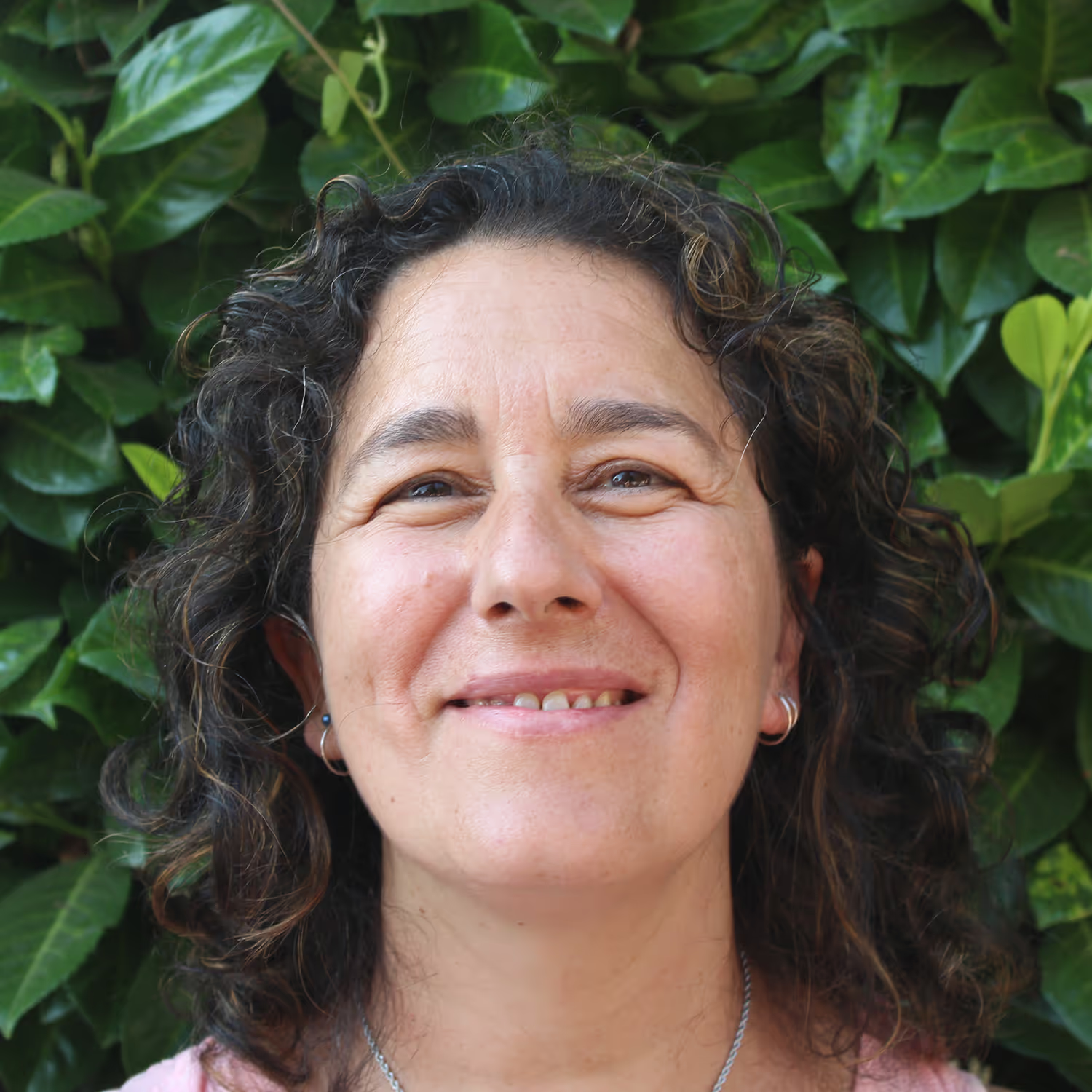
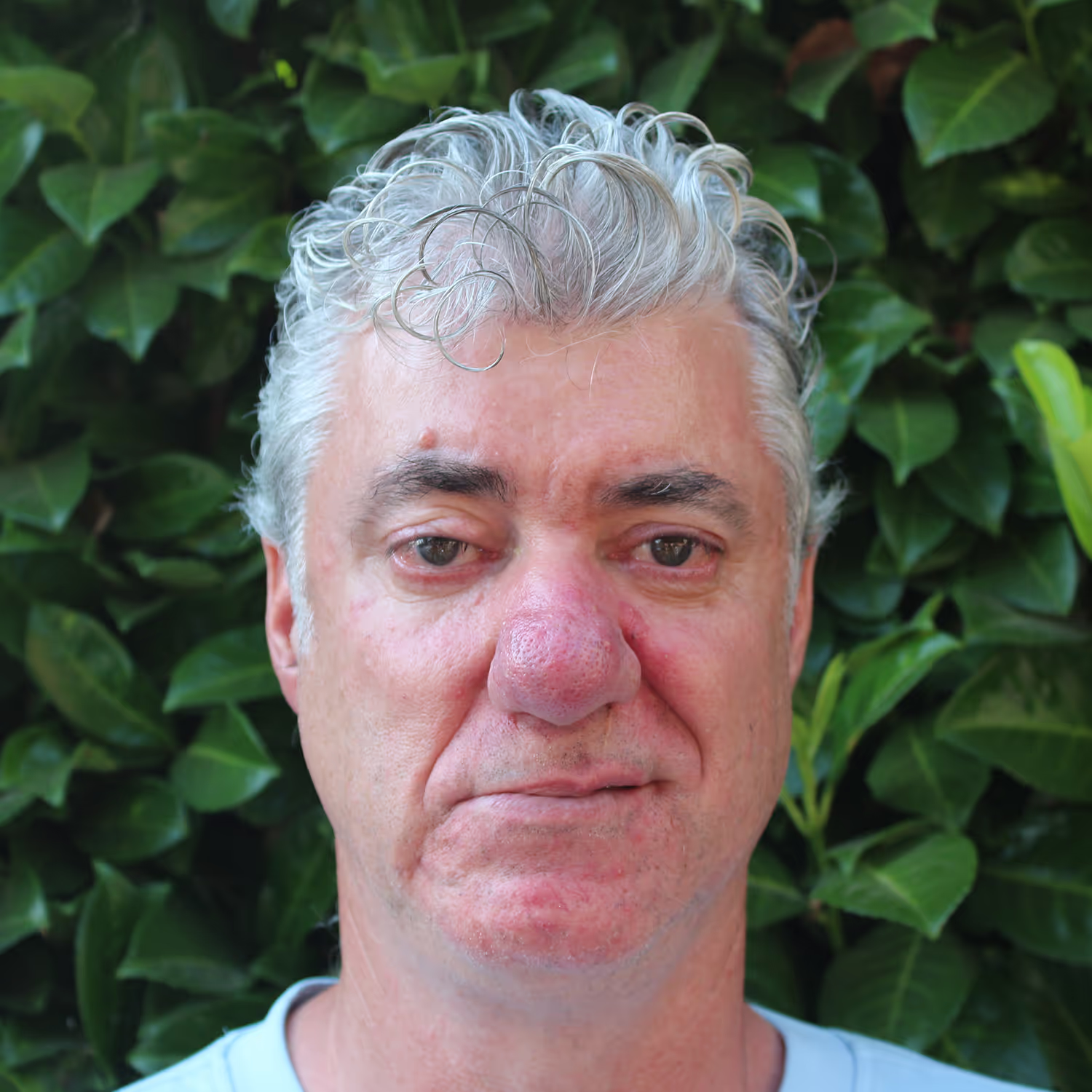
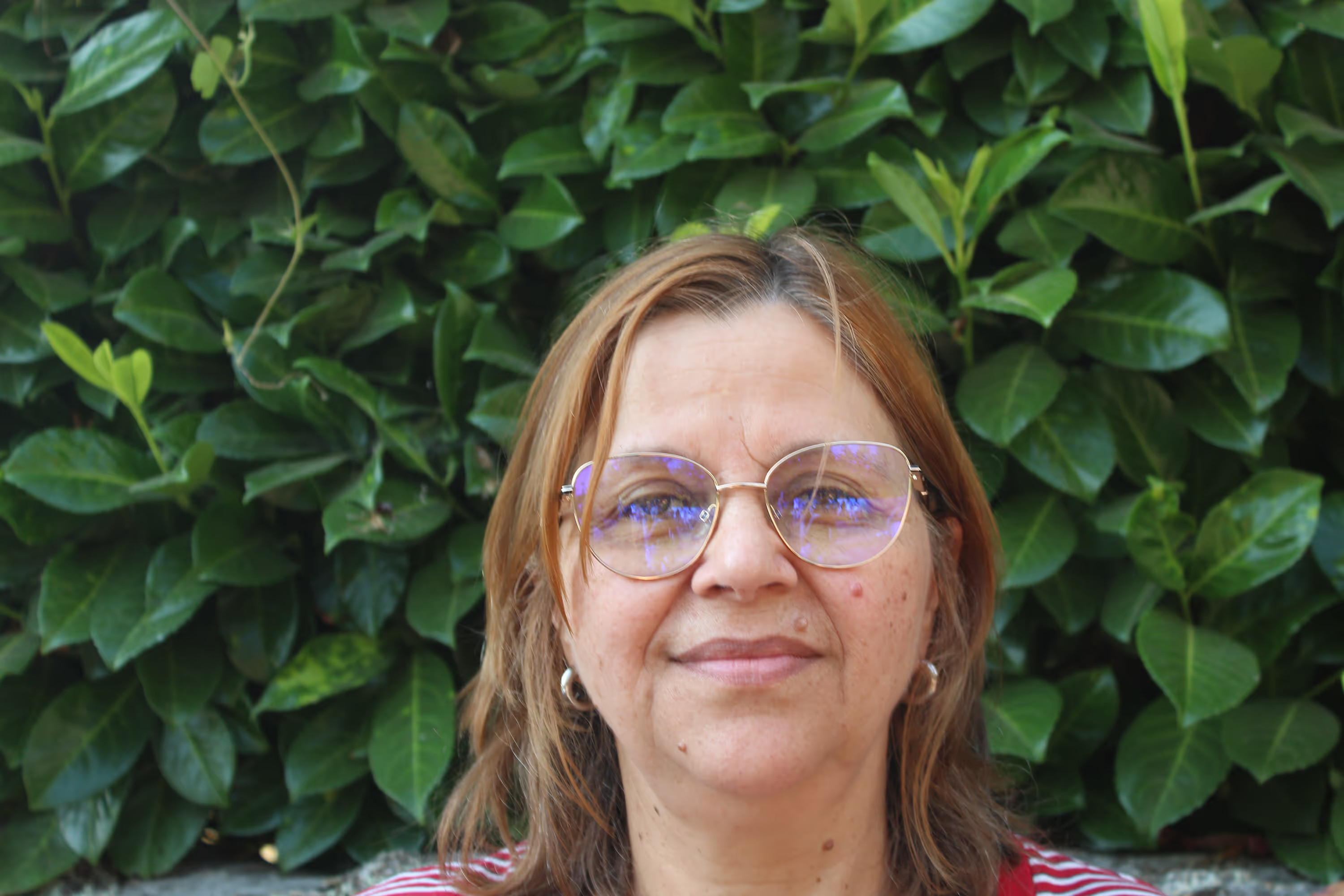
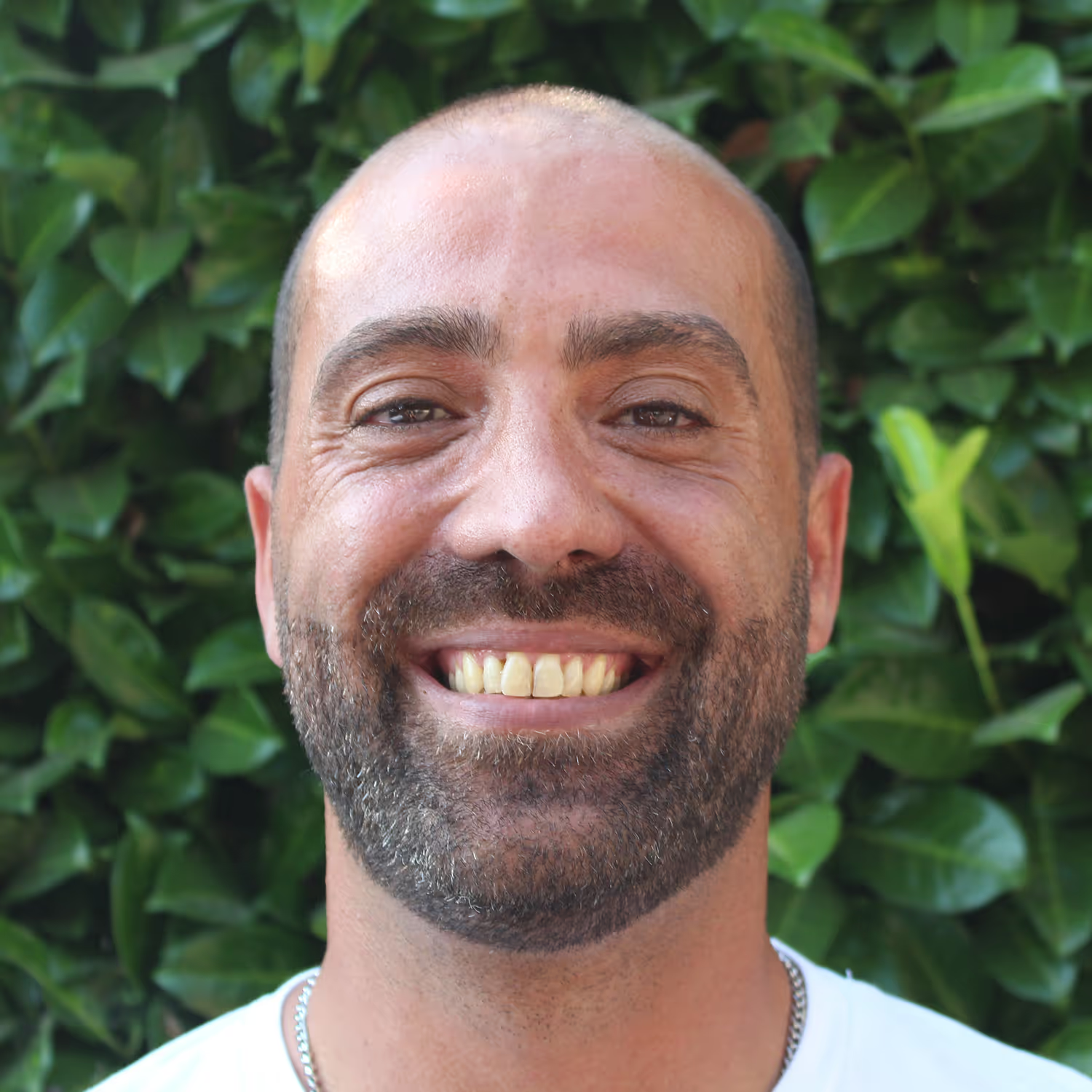
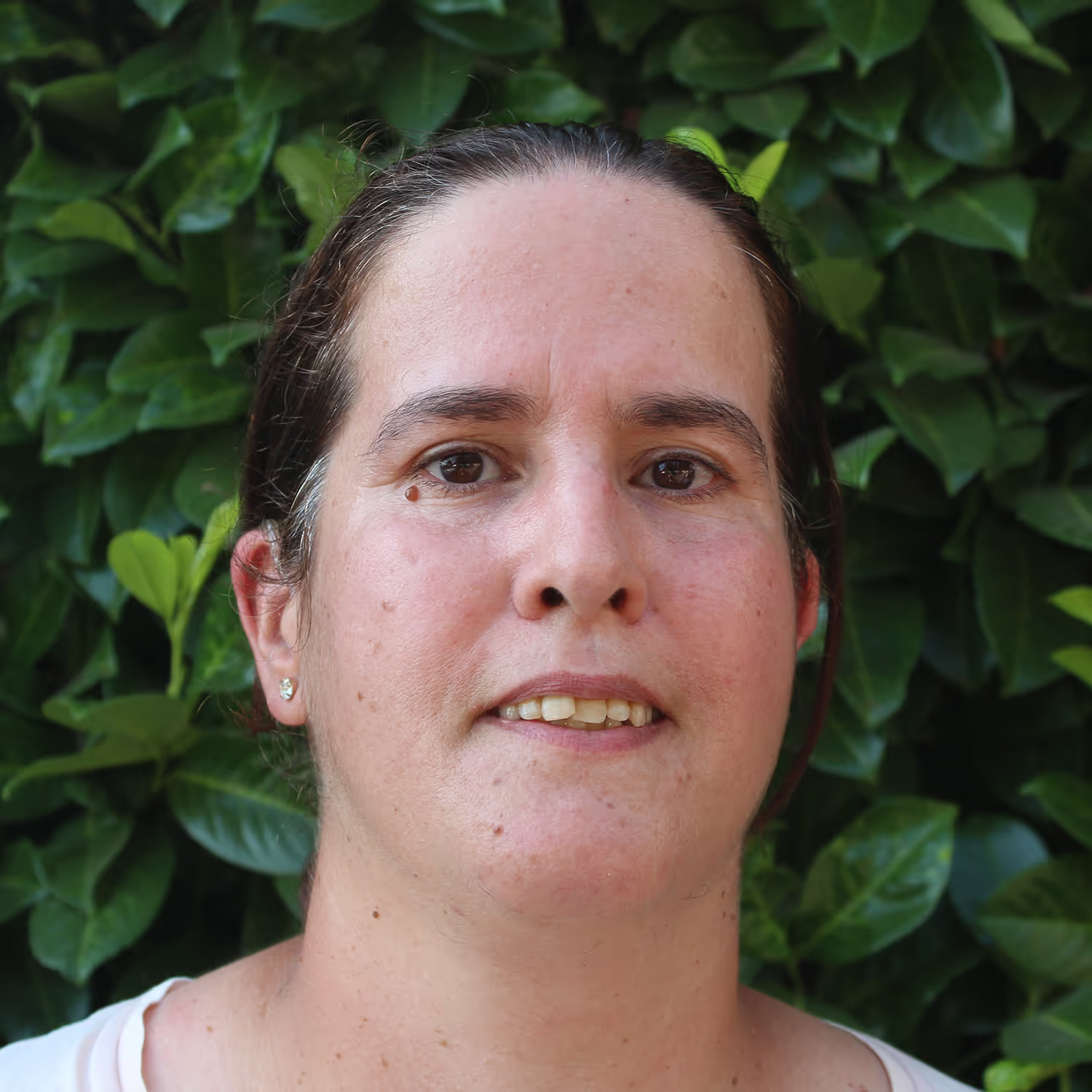
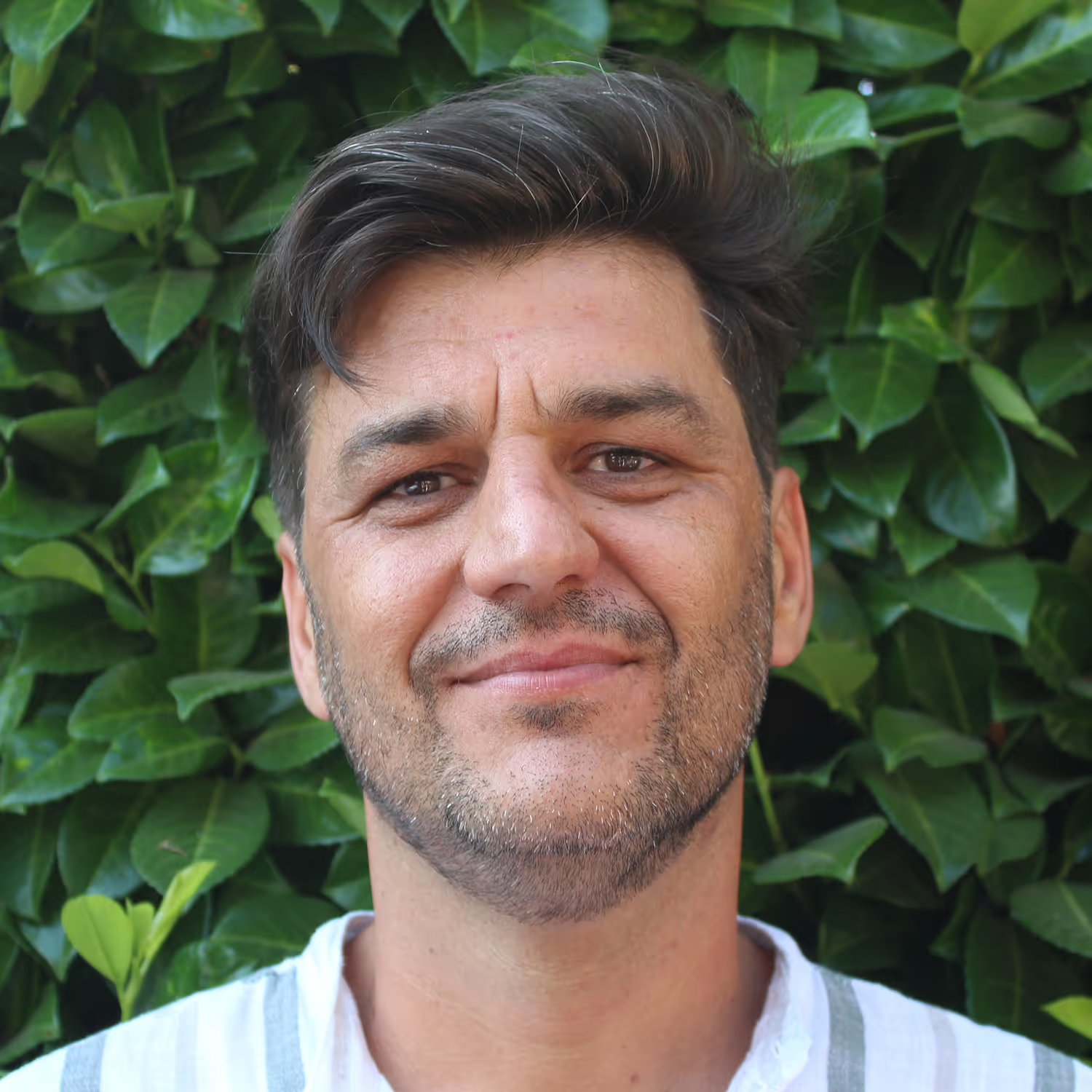
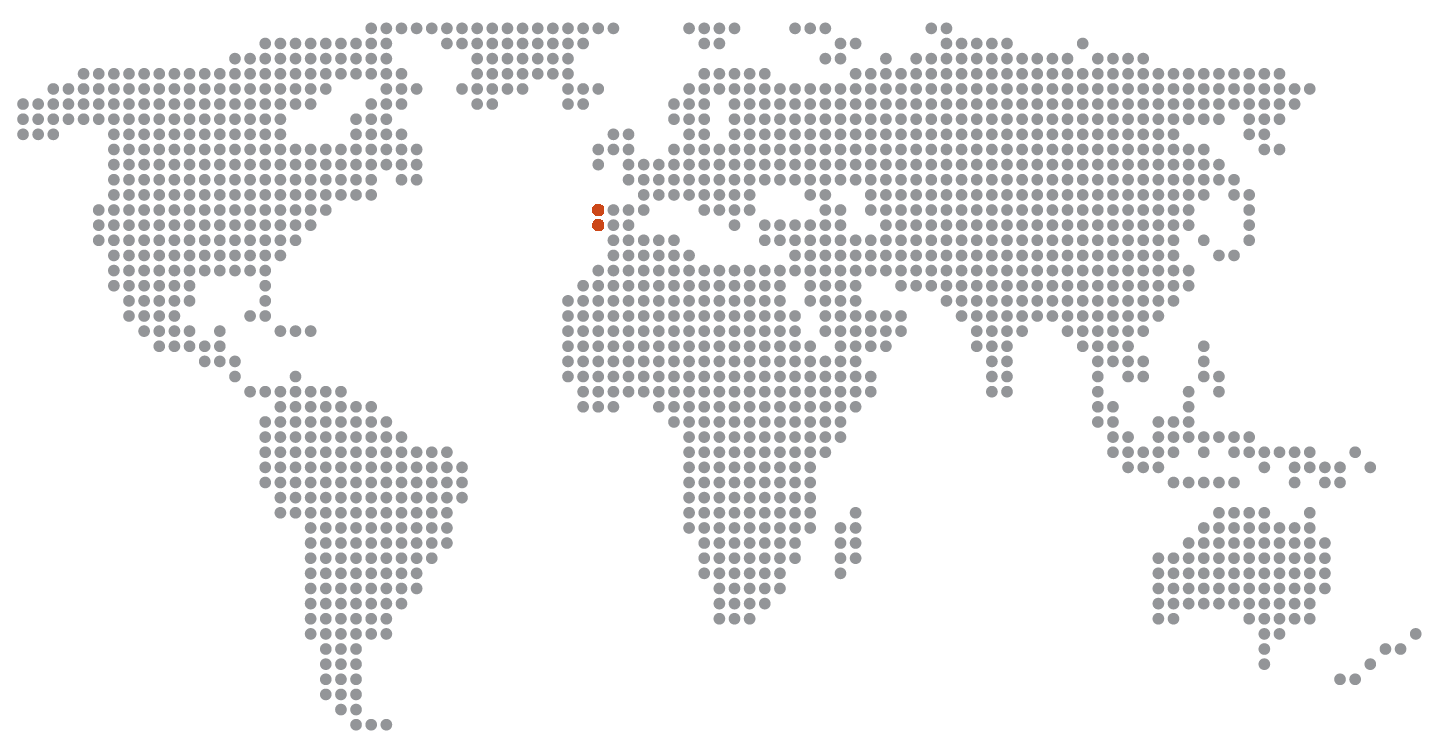
The School of Education of the Polytechnic Institute of Porto (ESE P.PORTO) is participating in this project as the coordinating institution, through a team of lecturers and researchers with extensive experience in the fields of inclusion, deafness, sign language interpreting, and the training of education and translation/interpreting professionals.
Recognised for its strong commitment to inclusion, ESE P.PORTO has developed practices and research that promote a more equitable and accessible education for all.
Its interdisciplinary approach and close connection to the educational community reinforce its mission to actively contribute to the creation of inclusive educational environments.
Within the CARES-Deaf project, ESE P.PORTO is responsible for the overall coordination of the international consortium, ensuring the strategic alignment of activities and the development of innovative tools to promote equal access for deaf citizens to mental health services. The ESE P.PORTO team leads Work Packages 1 (Project Management), 3 (Toolkit for Teachers) and 4 (Training for Sign L.I.) and actively contributes to the remaining work packages, including the comparative study, the development of a training toolkit, and the formulation of policy recommendations for higher education and health services.
Contact details:
Susana Barbosa
(Project Coordinator) susanabarbosa@ese.ipp.ptSilvia Alves
(Project Manager) silviaalves@ese.ipp.pt
Miguel Santos
(member of the research team)
Manuela Sanches-Ferreira
(member of the research team)
Catarina Neto
(member of the research team)
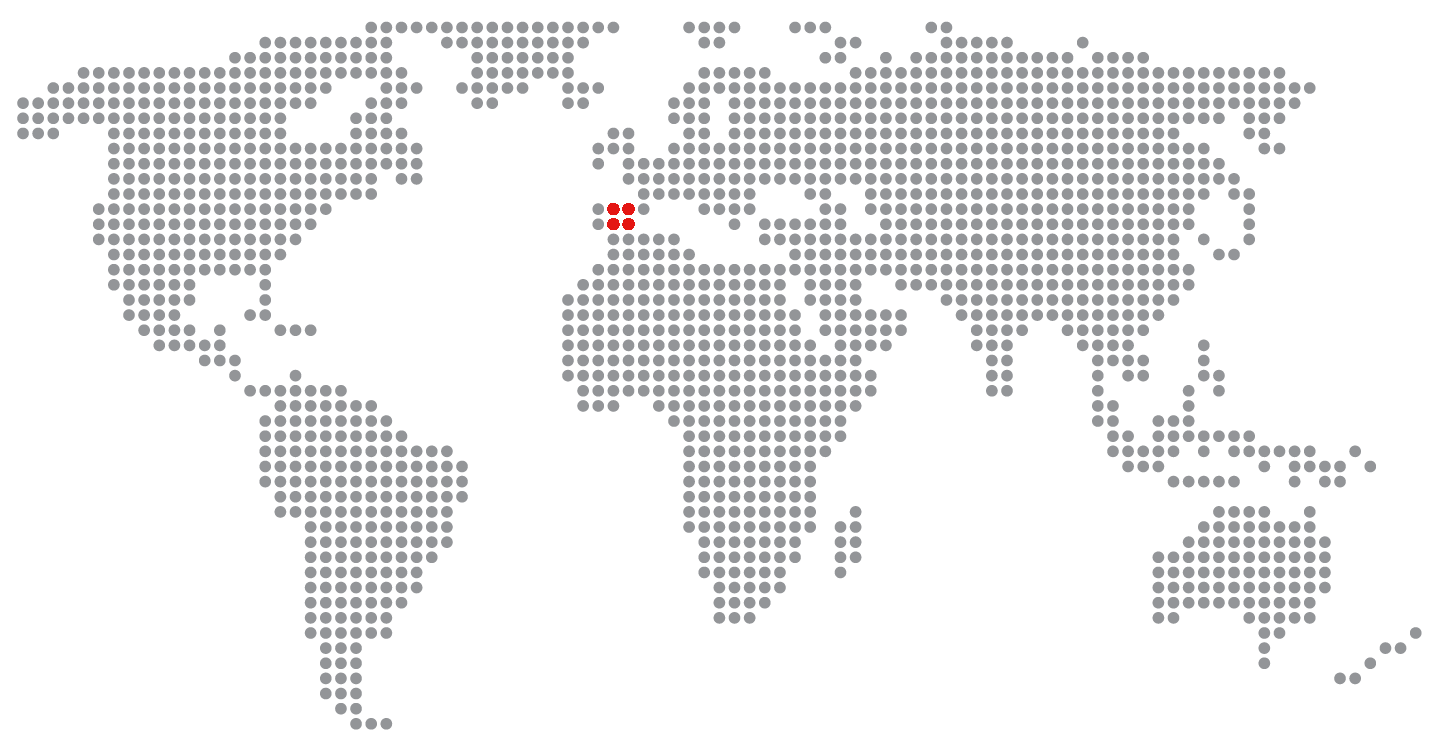
The Faculty of Medicine of the University of Porto (FMUP) is a prestigious higher education institution in Portugal, renowned for its excellence in education, its leading position in scientific research, and its strong collaborative network with nearly twenty public and private healthcare institutions across the country.
Dedicated to the scientific, technological, and humanistic training of physicians and other health professionals, FMUP plays a central role in improving population health. Each year, it welcomes hundreds of students into its Integrated Master's Degree in Medicine (MMED) and the Bachelor's Degree in Digital Health and Biomedical Innovation (SauD InoB), along with a wide range of postgraduate programs, including Master's and Doctoral degrees.
FMUP also invests heavily in specialized training, advanced studies, and lifelong learning, offering high-quality in-person and online educational programs tailored to the evolving needs of diverse audiences — particularly medical and health professionals seeking to deepen their expertise or advance their careers.
A key strength of FMUP is its strategic partnership with the São João University Hospital Center, through the Porto Academic and Clinical Center (CAC.Porto), a multidisciplinary collaborative hub.With a nearly two-century legacy, FMUP combines the solidity of its history with a forward-looking spirit of innovation. Its outstanding teaching, robust research activity, and advanced clinical practice continue to define the institution's reputation and mission.
Contact details:
Ivone Duarteiduarte@med.up.ptSofia Baptistabaptistas@med.up.ptAlberto Freitas
alberto@med.up.ptRui Nunes
ruinunes@med.up.pt
Universidad Rey Juan Carlos (URJC) is a young public university with several campuses in the greater Madrid area, whose mission is to foster innovative research and high-quality education in one of Spain’s fastest-growing regions. URJC has managed to grow up to almost 43,500 students and nearly 2,700 lecturers (2023-2024), being currently the second largest among the six public Universities in Madrid in terms of students. URJC has a strong international projection, with an academic community comprising 3,000 foreigners from 60 countries. Since 2019, URJC has been involved in more than 120 European and international projects with a total of EU funding up to about € 22 MM, of which 34 belong to the H2020 Programme and 18 to the Horizon Europe Programme. URJC has actively participated in the Marie Sklodoswska Curie Actions, both acting as hosting institution for researchers, and participating in Individual Fellowships actions.
The Universidad Rey Juan Carlos has a degree in Spanish Sign Language and Deaf Community, the only one offered within the Spanish university system. The teaching staff is composed of deaf and hearing professors, the latter mostly Spanish sign language interpreters with extensive knowledge of international signs. This university degree, along with other academic programs, contributes to promoting values of equity, inclusion, and social responsibility, both in a specific and cross-cutting manner.
In the CARES-Deaf project, URJC is a partner within the consortium, working closely with the coordination team to promote equal access for deaf citizens to mental health services. URJC leads quality monitoring and assurance, as well as Work Package 5 (Policy Paper), although its participation and cooperation extend across all work packages established in the project.
Contact details:
Ricardo Moreno Rodríguez
(Principal Investigator) ricardo.moreno@urjc.esInmaculada Garrote Camarena
(co-Principal Investigator) inmaculada.garrote@urjc.es
Rayco Hautacuperche González Montesino
(member of the research team)
raycoh.gonzalez@urjc.esIvánVázquez Villar
(member of the research team)
ivan.vazquez@urjc.esSusana Bena Villaseñor
(member of the research team)
susana.bena@urjc.esMaría Celeste González González
(member of the research team)
mariaceleste.gonzalez@urjc.esStephanie Marie Michele Papin
(member of the research team)
stephanie.papin@urjc.esFrancisco Vera Villaverde
(member of the research team)
francisco.vera@urjc.es
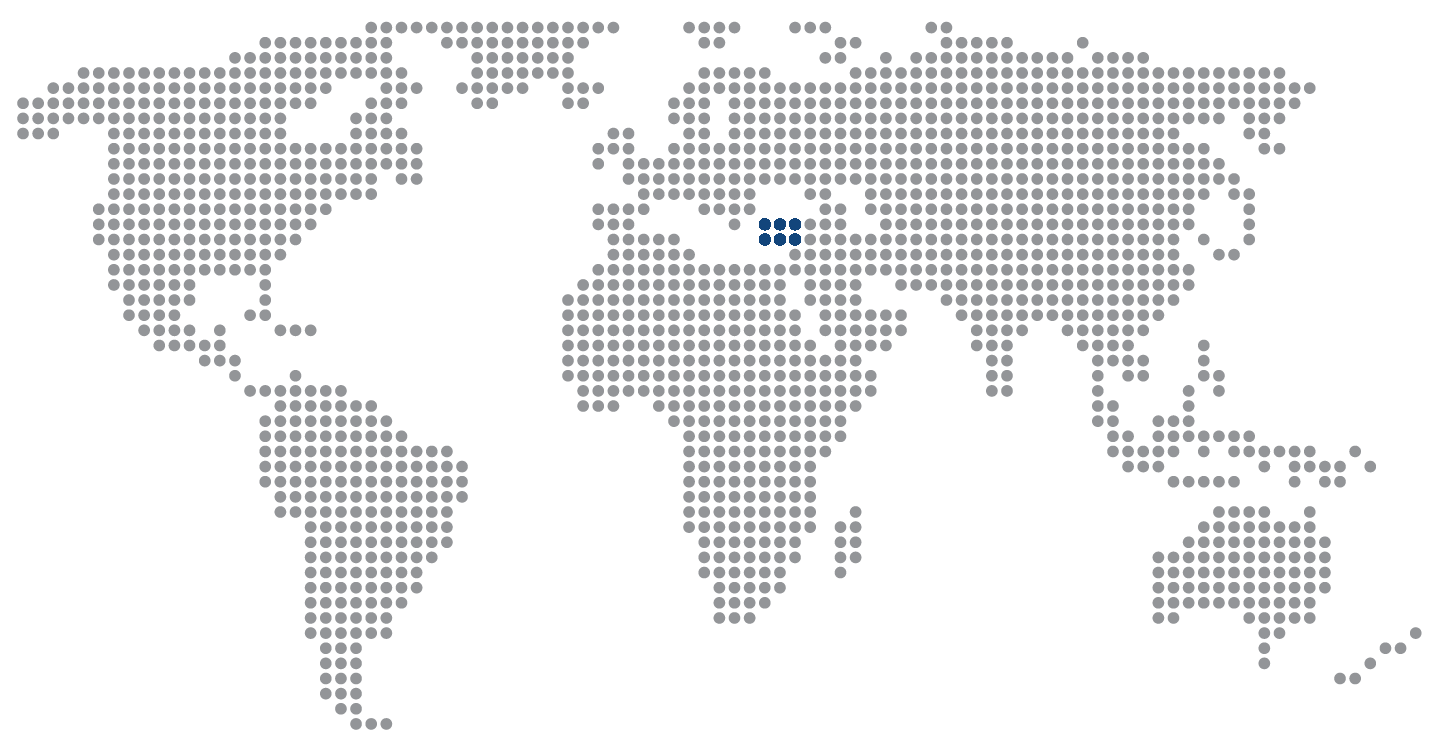
Necmettin Erbakan University is a higher education institution that stands out for its efforts to facilitate access to higher education for individuals with disabilities and create an inclusive learning environment. The Disability Student Unit Coordination Office, which operates within the university, provides support services for students with special needs and aims to minimize the academic, social and physical barriers faced by these students.
In line with the principles of social awareness and equality, Necmettin Erbakan University has implemented various academic and technical arrangements for hearing, visual, physical, and other disability groups. In this context, multifaceted efforts are being made, such as converting course materials into accessible formats, providing sign language support, implementing physical accessibility arrangements, and educating staff on disability awareness.
With its strong commitment to inclusive education, Necmettin Erbakan University not only aims to improve the skills of its current students but also those of teacher candidates and education professionals in effectively communicating with and supporting individuals with disabilities. Through these efforts, which are carried out with the contributions of academics from various disciplines, the university also contributes to national and international projects focused on accessibility and inclusivity.
In this regard, Necmettin Erbakan University has the infrastructure and academic expertise to contribute to projects such as CARES-Deaf and has the potential to actively contribute to the development of innovative solutions that support equal access to education and healthcare services for individuals with hearing impairments.
Contact details:
Prof. Dr. Hakan Sari
hakansari@gmail.comHikmet Beyza Yakic
(Research Assistant)
hbeyzayakici@gmail.com
The Faculty of Translation and Interpreting (FTI) is one of the oldest centers for translation and interpreting education and research in the world. The programs offered pave the way to careers in translation and interpreting including but not limited to public relations, the media, administration, tourism, court interpreting, linguistic mediation, and of course translation and conference interpreting, as well as teaching and research. Organized into the Department of Translation, Department of Translation Technology, and the Interpreting Department, the FTI fosters a comprehensive approach to language studies. We are a team working at the Department of Translation Technology (DTIM) within the Faculty of Translation and Interpreting (FTI) at the University of Geneva that is dedicated to advancing translation technologies accessibility, with a focus on accessibility, including sign language (SLs) applications. Within the CARES-Deaf project, Prof. Pierrette Bouillon and Irene Strasly actively contribute to all work packages (except work package 1 – Project Management). Their contribution focuses on the French-speaking region of Switzerland.
+ infoContact details:
Pierrette Bouillon
pierrette.bouillon@unige.chIrene Strasly
irene.strasly@unige.ch





The objective of CARES-Deaf is to help higher education institutions and future sign language interpreters to respond the European call of deaf citizens to equally access mental health care services, without discrimination on the basis of their deafness.
To achieve the overall objective, the consortium will:
Concrete results
Responses from deaf People
+ informação sobre este assunto
Este bloco de texto é opcional. Se preferir que seja ocultado, por favor indique.
Na tabela abaixo será introduzido o texto que submeter com o programa. Por favor indique devidamente qual o título, subtítulo e corpo de texto para cada entrada.
Abaixo apresentam-se exemplos do que poderá ser o programa.
Considere-se a primeira entrada como EXEMPLO. As seguintes têm texto representativo.
Este bloco de texto é opcional. Se preferir que seja ocultado, por favor indique.
Na tabela abaixo será introduzido o texto que submeter com o programa. Por favor indique devidamente qual o título, subtítulo e corpo de texto para cada entrada.
Abaixo apresentam-se exemplos do que poderá ser o programa.
Considere-se a primeira entrada como EXEMPLO. As seguintes têm texto representativo.
Este bloco de texto é opcional. Se preferir que seja ocultado, por favor indique.
Na tabela abaixo será introduzido o texto que submeter com o programa. Por favor indique devidamente qual o título, subtítulo e corpo de texto para cada entrada.
Abaixo apresentam-se exemplos do que poderá ser o programa.
Considere-se a primeira entrada como EXEMPLO. As seguintes têm texto representativo.
Este bloco de texto é opcional. Se preferir que seja ocultado, por favor indique.
Na tabela abaixo será introduzido o texto que submeter com o programa. Por favor indique devidamente qual o título, subtítulo e corpo de texto para cada entrada.
Abaixo apresentam-se exemplos do que poderá ser o programa.
Considere-se a primeira entrada como EXEMPLO. As seguintes têm texto representativo.
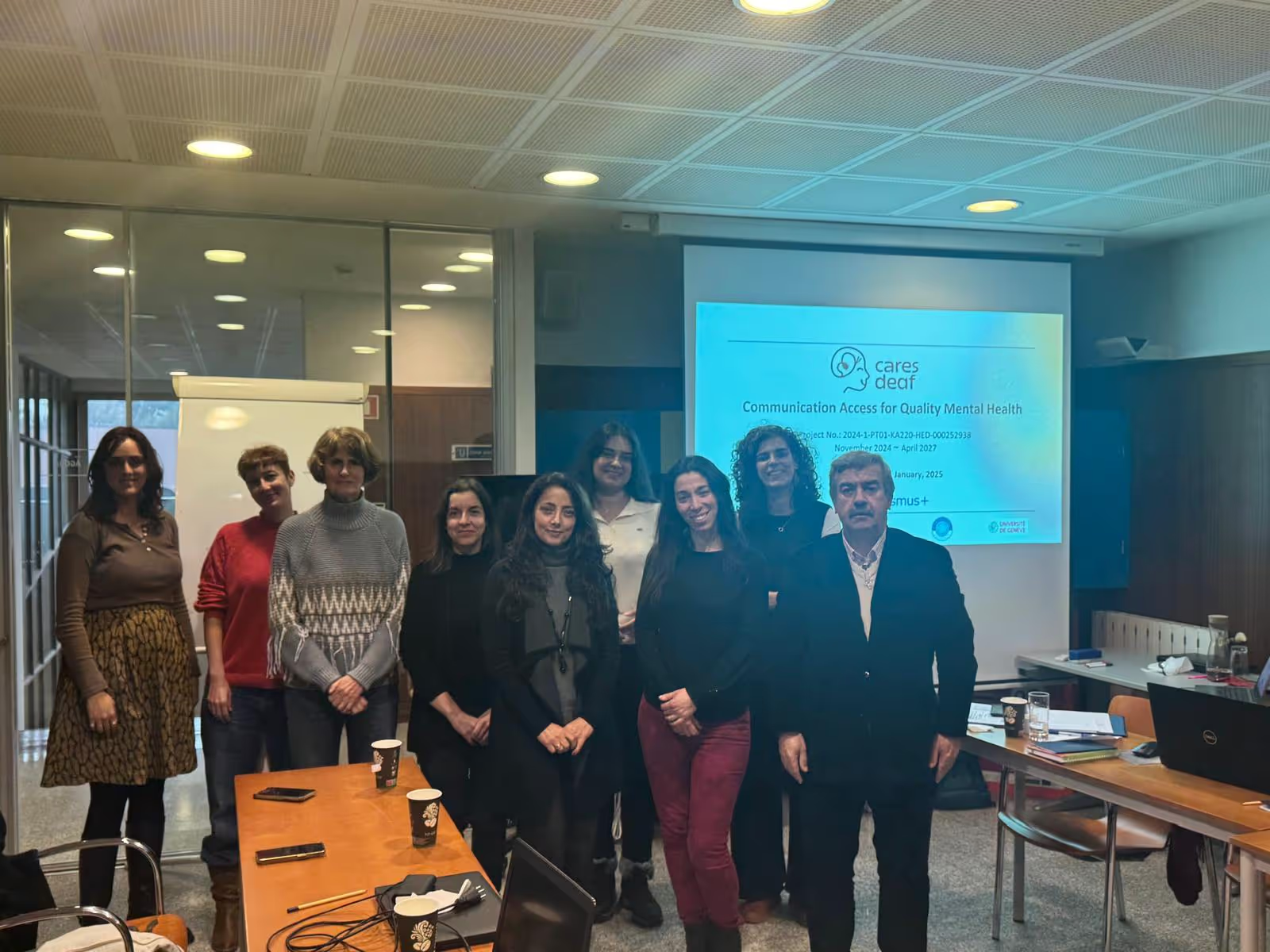
On january 27 and 28, 2025, the official kick-off meeting of the CARES-Deaf consortium took place at the School of Education of the Polytechnic Institute of Porto (ESE P.PORTO), the coordinating institution of the project. This meeting marked the formal launch of the project’s activities, bringing together all partner institutions in a collaborative and inspiring environment. During the two days, the main goals, work packages, and the shared vision to promote equal access for deaf citizens to mental health services across Europe were discussed and aligned.
Venue: Escola Superior de Educação do Politécnico do Porto
Dates: 27 and 28 january 2025
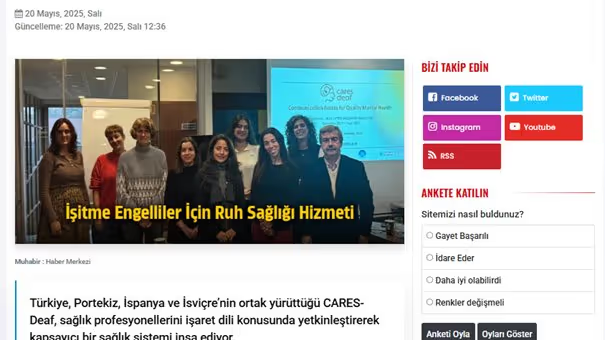
One of our project partners promoted the CARES-Deaf project through Turkish media! The article, published by KONYA Postası, highlights our shared commitment to improving access to mental health services for Deaf individuals across Europe.
Read the article (in Turkish)
Venue: Türkiye (Necmettin Erbakan University)
Dates: 20 may 2025
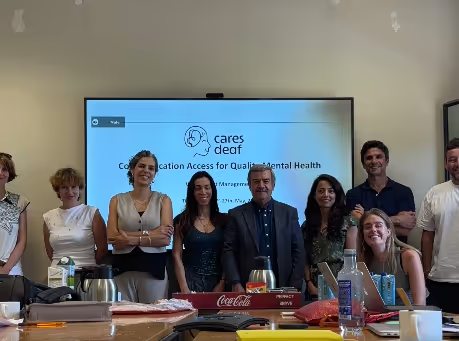
On may 26 and 27, 2025, the second in-person meeting of the CARES-Deaf consortium took place in Madrid, hosted by Universidad Rey Juan Carlos, one of the project’s partner institutions. This working session strengthened collaboration among teams, monitored the progress of ongoing activities, and defined the next strategic steps.
Venue: Universidad Rey Juan Carlos, Madrid
Dates: 26 and 27 may 2025
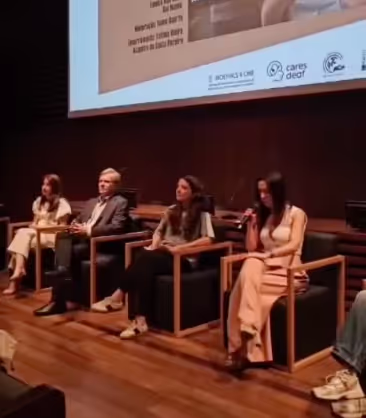
The Oscar-winning film CODA was shown at the Faculty of Medicine to spark dialogue on Deaf culture and communication.
CARES-Deaf team members shared reflections, linking the film's message to our mission: equitable mental health access for the Deaf community. Cinema meets inclusion.
Venue: Faculty of Medicine
Dates: 12 june 2025
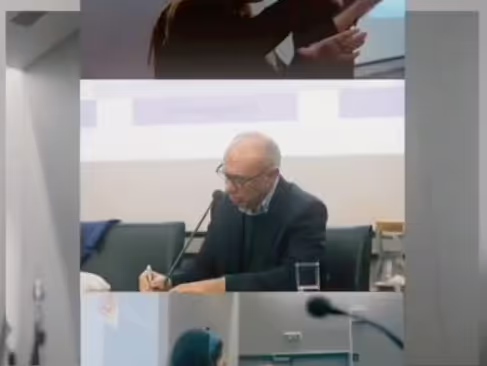
The seminar “Mental Health: Challenges for Deaf People in Portugal” aimed to foster dialogue among health professionals, interpreters, the Deaf community, and other stakeholders. It provided a space for reflection on communication accessibility and mental health support, emphasizing the importance of developing strategies and sharing good practices that promote inclusion and equity in healthcare. The event underscored the social and institutional relevance of this issue.
Venue: Escola Superior de Educação do Politécnico do Porto
Dates: 22 november 2025
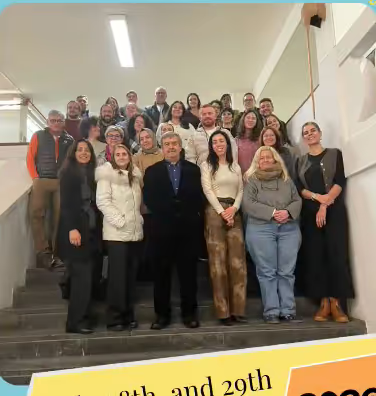
Between 26 and 29 January, ESE | P.PORTO and inED had the pleasure of welcoming the Erasmus+ CARES-DEAF project team for an LTTA marked by collaboration and learning.Throughout the week, around 40 participants from the partner countries — Türkiye, Spain, Switzerland and Portugal — came together to share experiences and knowledge.

Venue: Escola Superior de Educação do Politécnico do Porto
Dates: 26 – 29 january 2026
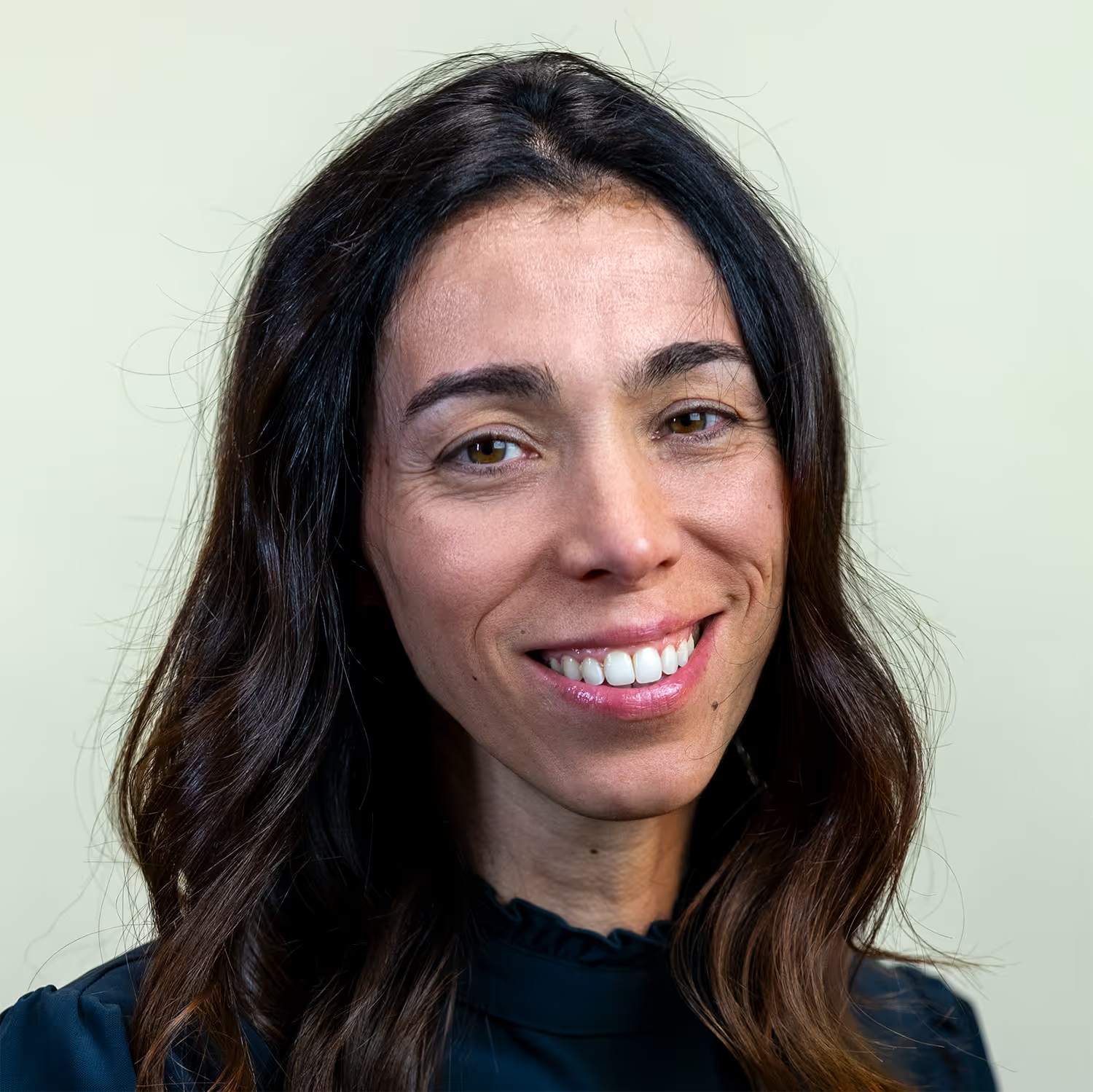
PhD in Developmental and Language Disorders. Associate Professor, coordinator of the degree in Translation and Interpretation in Portuguese Sign Language, coordinator of the master's degree in Specialized Translation and Interpretation in Portuguese Sign Language, and researcher at InEd. She has coordinated and is the author and coauthor of several books. Speaker, organizer, and responsible for various events related to deafness, Portuguese Sign Language, and the profession of translator and interpreter, areas in which she has various published works, both nationally and internationally.
Sílvia Alves is an Assistant Researcher at the Research and Innovation in Education Centre (inED) of the School of Education, Polytechnic Institute of Porto. She completed her PhD in Psychology in 2016 at the Faculty of Psychology and Education Sciences, University of Porto.
For five years, she served as Science Manager at inED and is currently a member of the Board of this R&D unit. She is also an Invited Adjunct Professor at the School of Education of the Polytechnic Institute of Porto, where she teaches or has taught in the Master’s in Special Education courses such as Mobility Restrictions and Neuromusculoskeletal Disabilities, Foundations of Special Education, Development of Individualized Educational Programs, and Educational Research.
Her research focuses on special education and inclusion, particularly in the fields of educational policy, assessment, ICF-CY, individualized educational programs, support needs, participation, and the inclusion of children and young people with disabilities or additional support needs. She has published several articles and book chapters on these topics and has extensive experience in international projects, namely within ERASMUS+.
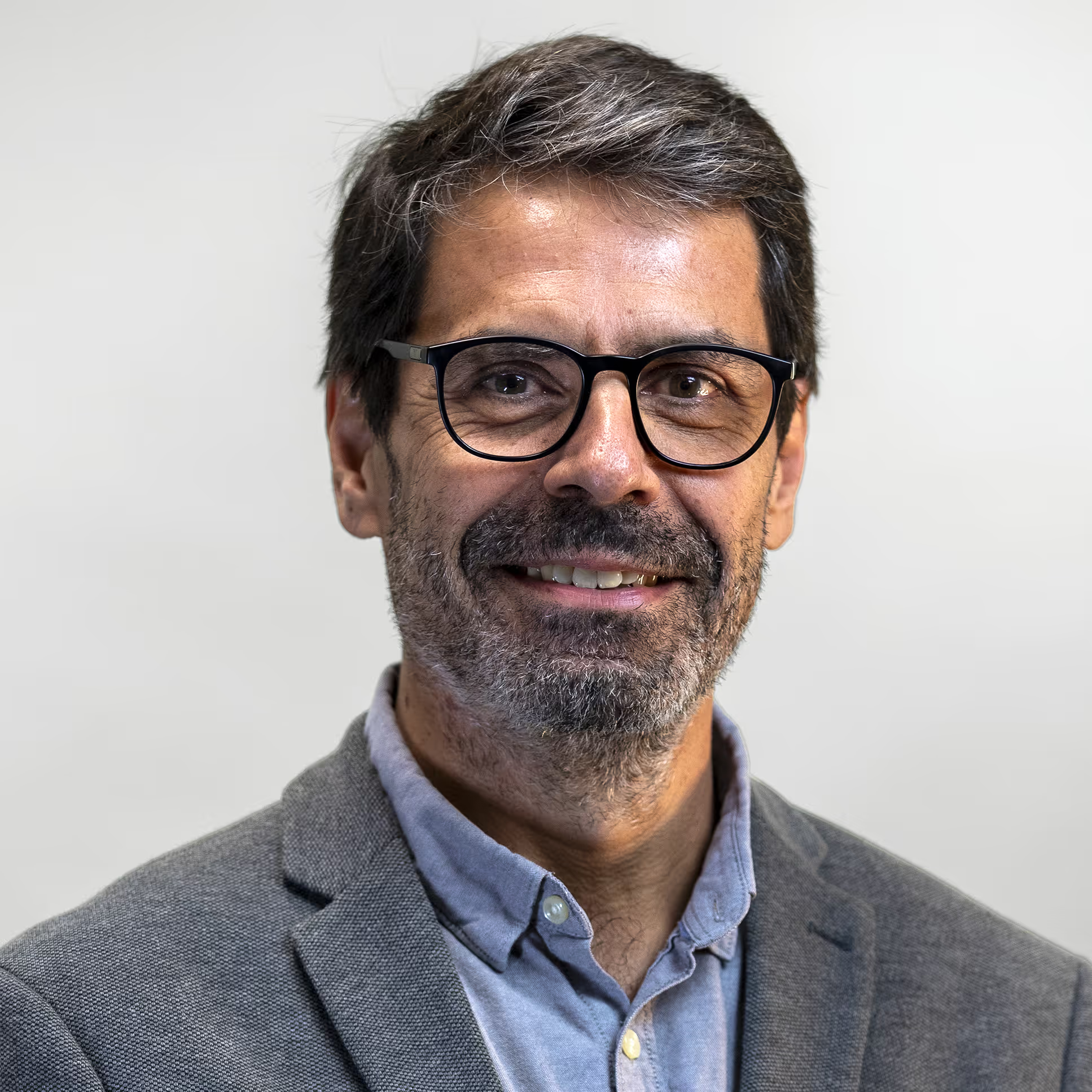
Miguel Augusto Meneses da Silva Santos completed his PhD in Educational Psychology in 2007 at the University of Minho, his Master's in Special Educational Psychology in 1999, also at the University of Minho, and his undergraduate degree in Psychology in 1994 at the University of Coimbra. He is a Coordinating Professor at the Polytechnic of Porto, currently serving as Vice-President of the School of Education and as a member of the Board of inED — Centre for Research and Innovation in Education. Throughout his academic career, he has participated in 14 funded research projects, acting as principal investigator in 3 and integrated researcher in 11. He currently coordinates the Portuguese team of the Erasmus+ project SOULSS — Scaffolding Online University Learning: Support Systems, dedicated to developing resources and tools to promote Inclusion in Higher Education. His scientific activity is situated within the field of Social Sciences, with an emphasis on Educational Sciences, particularly in the areas of Special Education and Educational Psychology. He has collaborated with 118 researchers, resulting in multiple scientific co-authorships. Between 2012 and 2023, he held coordination roles for teams of Portuguese Sign Language interpreters providing services at the Polytechnic of Porto, as well as teams responsible for assigning and monitoring special status for students with additional support needs. From this work, he developed the internal (inED) project “Inclusion in Higher Education – from ensuring access to promoting success.”
Maria Manuela Sanches Ferreira é Professora Coordenadora da Unidade Técnico-Científica de Educação Especial da Escola Superior de Educação do Instituto Politécnico do Porto (ESEP). É licenciada em Psicologia pela Faculdade de Psicologia e de Ciências da Educação da Universidade do Porto, com mestrado e doutoramento na mesma instituição.
As suas áreas científicas de interesse e investigação são a formação de professores para a inclusão, a avaliação e habilitação em contextos educativos e a deficiência intelectual. É coordenadora do Mestrado em Educação Especial: Problemas de Cognição e Multideficiência e da Unidade de Apoio à Escola Inclusiva; e é Diretora do Centro de Investigação e Inovação em Educação - inED.
Tem estado envolvida, como coordenadora, em projetos relacionados com políticas de educação especial e inclusão, tendo liderado a avaliação externa da implementação da legislação portuguesa sobre educação especial (2009-2010); e prestado consultoria à UNICEF-Arménia para a revisão da avaliação das necessidades educativas especiais.
Participou também como perita portuguesa em projetos da Agência Europeia para as Necessidades Especiais e a Educação Inclusiva, como o Teacher Education for Inclusion: Profile of Inclusive Teachers (2009-2011) e Raising Achievement for All Learners (2012, 2013; 2014-2016), e como coordenadora da equipa portuguesa em projetos como: 'BASE - BEHAVIORAL ASSESSMENT TO IMPROVE SCHOOL ENVIRONMENT' (2017-2020), e 'BEHAViour management models across Europe' (2017-2020), projetos Erasmus+.
Ao longo dos anos tem desenvolvido, participado e coordenado vários projetos no domínio da intervenção comunitária e da educação, subsidiados por fundos nacionais - e.g. Fundação Calouste Gulbenkian, Fundação Aga Khan, Ministério da Saúde - e europeus - e.g. Programas Leonardo da Vinci, Sócrates, Grundtvig e Comenius.
As suas publicações recentes centram-se na formação de professores para a inclusão, na utilização da ICF-CJ na avaliação e elegibilidade das necessidades de apoio adicionais.
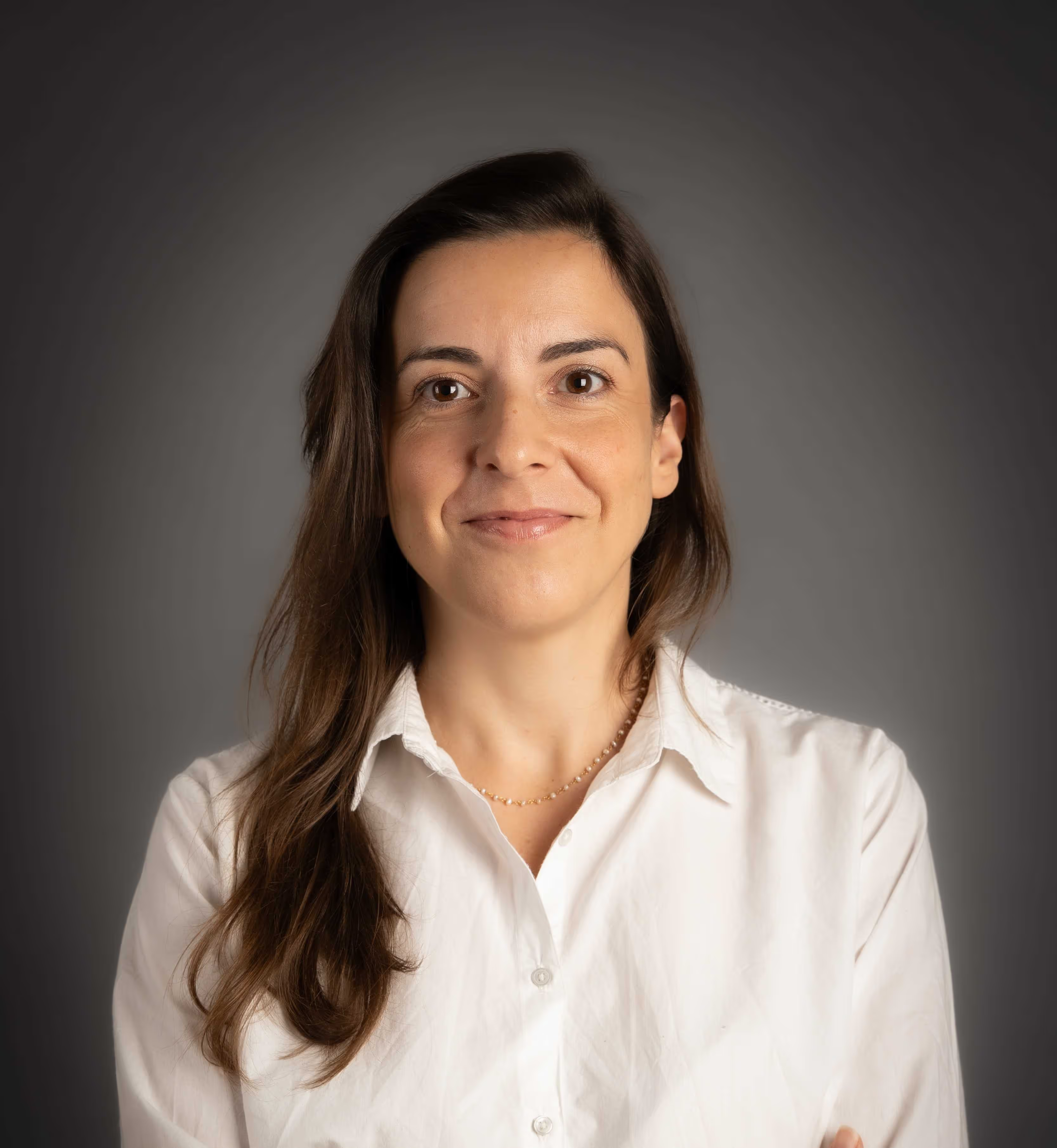
PhD student in Public Policy at ISCTE-IUL, has a Master degree in Health Education at the University of Porto, and more than 10 years of experience as project manager in European projects dedicated to education. As a result of fruitful collaborations with European higher education entities over the years, further developed and applied scientific practices in school-based interventions and participated in conferences and in the elaboration of publications.
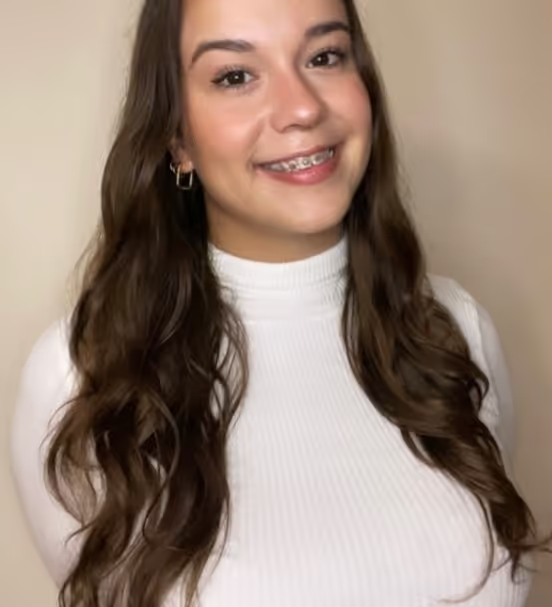
Master’s degree in Social Education and Intervention from the Polytechnic of Porto and a Bachelor’s degree in Educational Sciences from the University of Porto. Her research focuses on educational and social policies, the development of competencies in formal and non-formal learning contexts, community-based education and devolopment, and inclusive education. Contributed to projects on Education for Global Development and Citizenship and community-based initiatives, combining methodological rigor with community-based perspectives.
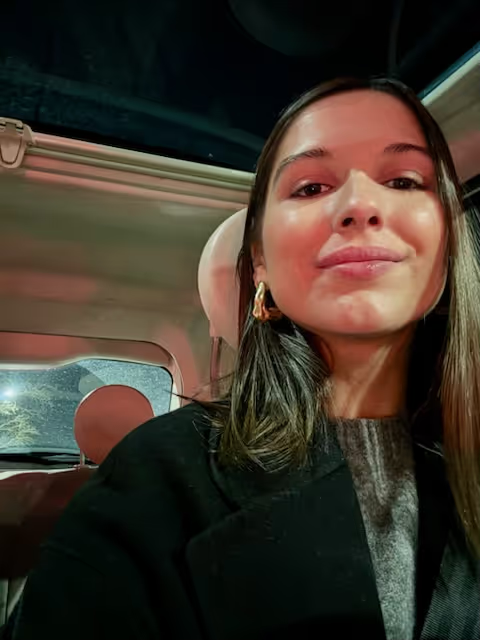
Doctoral researcher in the social sciences, with a focus on education and the humanities.Her research interests include the integration of minority groups, social, civic, and political participation, as well as language teaching and learning.
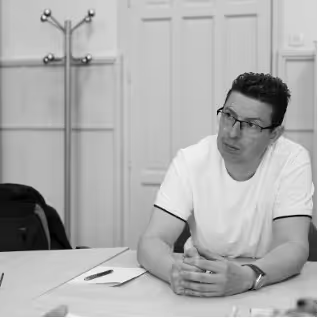
Occupational Therapist, Master’s Degree in the Study and Treatment of Pain, and PhD from Rey Juan Carlos University. A full-time educator and social innovator with over 20 years of experience in the field of disability, he has been recognized with four five-year teaching periods and four DOCENTIA evaluation segments (two rated as EXCELLENT). He was the founder and Director of the Support Unit for Persons with Disabilities and Special Educational Needs at Rey Juan Carlos University from 2005 to 2019. He is also the creator and coordinator of the Bachelor's Degree in Spanish Sign Language and the Deaf Community (2016–2024) and currently serves as Director of the Master’s Program in Inclusive Education and Universal Design for Learning.
He coordinates the High-Performance Research Group DIVERSIA on Inclusive Education, Disability, and Accessibility. He teaches "History of Disability and Spanish Sign Language" in the Bachelor's Degree in Spanish Sign Language and the Deaf Community, "Attention to Diversity and Educational Inclusion: Didactic Implications" in the Bachelor's Degree in Primary Education, as well as "Foundations of Inclusive Education" in the Master's Program in Inclusive Education and Universal Design for Learning.
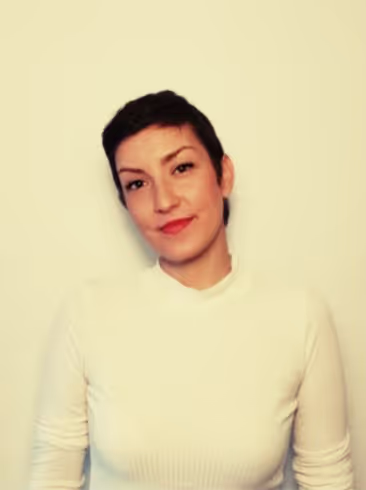
She holds a Bachelor's Degree in English Philology, a Master's Degree in Teacher Training, and a Master's Degree in Special Educational Needs in Early Childhood and Primary Education. She holds a PhD focused on language teaching and learning for deaf students. Her main area of interest is inclusive education. Since the 2017–2018 academic year, she has been teaching at Rey Juan Carlos University across various undergraduate programs, including Primary Education, Spanish Sign Language and the Deaf Community, Protocol and Event Management, Corporate Communication, and Social Work. She has also taught in the Master’s Program in Inclusive Education and Universal Design for Learning. She participates in several Erasmus+ projects, is a member of the DIVERSIA research group and the Institutional Chair on Disability, Accessibility, and Inclusion at URJC. She has co-authored multiple academic articles and presented at various conferences related to her field of research.
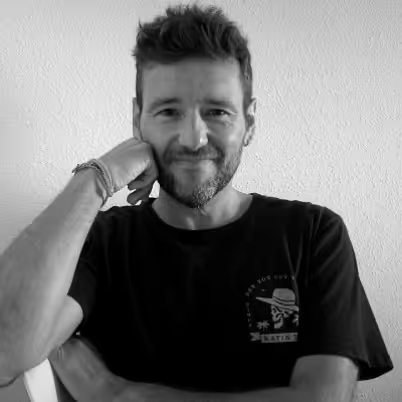
He holds a Diploma in Speech Therapy and a Bachelor's Degree in Social and Cultural Anthropology. PhD in Applied Linguistics (Cum Laude) from the University of Vigo, with the first Spanish doctoral thesis focused on signed language interpretation. He also holds two Master’s Degrees: one in Education for Diversity and another in Spanish Sign Language Interpretation. Since 2017, he has been a lecturer and researcher at Rey Juan Carlos University, teaching in the Bachelor's Degree in Spanish Sign Language and the Deaf Community, as well as in Social Work and related master's programs. He served as coordinator of the Erasmus+ and MUNDE exchange programs for this degree from 2017 to 2023. His main areas of research include sign language translation and interpretation, its pedagogy, linguistic analysis of LSE, and inclusive education, as well as Universal Design for learning. He is a member of the DIVERSIA Research Group and the Institutional Chair on Disability, Accessibility, and Inclusion at URJC, and collaborates with the GRILES research group at the University of Vigo.
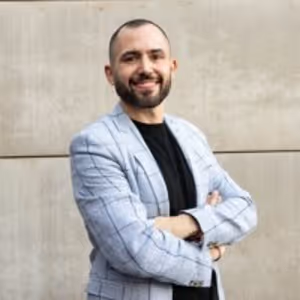
PhD (Cum Laude) in Humanities from Rey Juan Carlos University, with a 2024 dissertation focused on the identification of stereotypes and prejudices toward sign language and the deaf community. He holds a Bachelor’s Degree in Social Education, a Master’s Degree in Secondary Education Teacher Training with a specialization in Socio-Community Intervention. He is also certified as a Specialist in Spanish Sign Language, which has supported his career as an educator, researcher, and advisor in the fields of the Deaf community and communication accessibility. Since 2020, he has been a lecturer at Rey Juan Carlos University, teaching in the Bachelor’s Degree in Spanish Sign Language and the Deaf Community. His teaching is marked by an inclusive, participatory approach that encourages critical thinking and social engagement. In 2025, he joined the faculty of the Master's Program in Secondary Education Teacher Training (Socio-Community Intervention), further expanding his role in shaping future professionals in education and social work.
His main research interests include inclusive education, sign language, and the influence of media and social networks on social awareness.
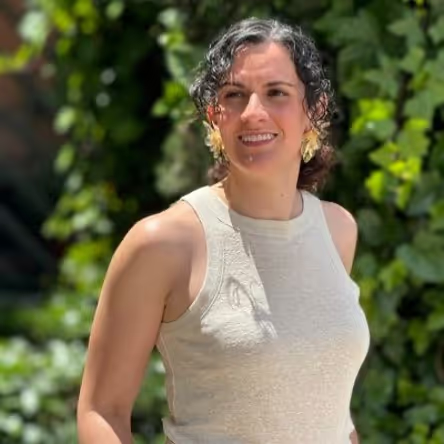
Susana Bena Villaseñor holds a PhD in Humanities: Language and Culture, with a focus on the education of deaf individuals. Since the 2017/18 academic year, she has been teaching core courses in the Bachelor's Degree in Spanish Sign Language and the Deaf Community at Rey Juan Carlos University, within the Faculty of Education, Sports Sciences, and Interdisciplinary Studies. Her deep commitment to educating students with Special Educational Needs (SEN) is considered innate, having always shown a selfless willingness to help others. She holds a Bachelor's Degree in Primary Education with a specialization in Music (2016) and a Master’s Degree in Special Educational Needs in Early Childhood and Primary Education (2017), both from Rey Juan Carlos University.
She began her professional career teaching Spanish Sign Language (LSE) at the Madrid Deaf Association in 2017, and soon after joined the faculty of the LSE and Deaf Community Degree Program. She also collaborates on various projects related to deaf education and the Deaf community.
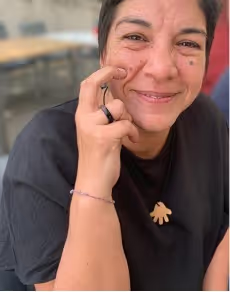
PhD from Rey Juan Carlos University (cum laude), holder of a Master’s Degree in Inclusive Education and Universal Design for Learning (2021–2022), a Bachelor's Degree in Spanish Sign Language and the Deaf Community (2016–2021), a Higher Technician Degree in Spanish Sign Language Interpretation and Deafblind Guide-Interpreting (2007–2009), and a certified Argentine Sign Language Interpreter since 1992. She has over 25 years of experience in sign language interpreting and Deaf culture, with professional work spanning artistic, healthcare, conference, and media contexts. This extensive background directly informs her teaching in the Bachelor's Degree in Spanish Sign Language and the Deaf Community since the 2021–2022 academic year. She teaches courses such as Spanish Sign Language Interpretation in Health Sciences, in Legal Fields, in Arts and Humanities, and Application of Interpretation Techniques to Spanish Sign Language. She also teaches in the Master's Program in Special Educational Needs in Early Childhood and Primary Education.
Her research activity centers on inclusive education and active methodologies, aligned with the 2030 Agenda, contributing to the achievement of Sustainable Development Goal 4 (Quality Education).
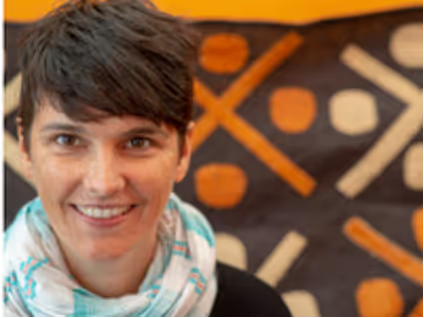
PhD from the International Doctoral School of Rey Juan Carlos University, specializing in the formal learning of a signed heritage language by Children of Deaf Adults (CODAs). She holds a Bachelor’s Degree in Education Sciences and a Master’s Degree in Language Sciences, specializing in French as a Foreign Language and Language Didactics with a focus on French Sign Language (LSF), both from Lille 3 University (France). Since 2018, she has been a visiting professor in the Deaf Community and Sign Language Bachelor's Degree at Rey Juan Carlos University, teaching general linguistics courses including Spanish grammar and applied communication, applied linguistics for sign languages, and pedagogy and didactics of sign language.
She has been involved in the Deaf World section of the Douarnenez Documentary Film Festival since 2015, providing conference interpretation, facilitating panels and workshops. Additionally, she has over 10 years of experience as a sign language interpreter across various sectors including health, administration, culture, and education (schools, secondary education, and university). She has co-authored multiple academic articles and presented at various conferences related to her field of research.
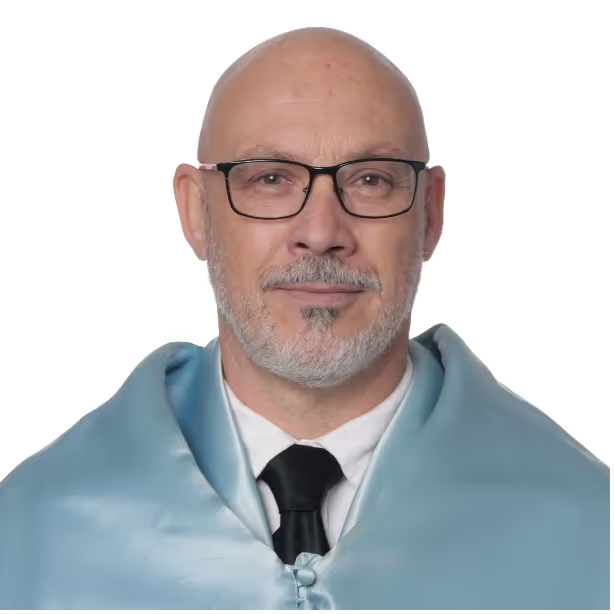
He holds a Bachelor’s Degree in Hearing and Language Education (2010) and a Bachelor’s Degree in Linguistics (2013) from the University of Cádiz, where he earned his PhD with cum laude honors in 2021. He also holds a Master’s Degree in Spanish Sign Language Communication (2015) from the University of Huelva. Since 2021, he has been an Assistant Professor in the Bachelor's Degree in Spanish Sign Language and the Deaf Community at Rey Juan Carlos University, combining teaching with research focused on Spanish Sign Language and signed languages in general.
He taught LSE at the Higher Center for Modern Languages of the University of Cádiz (2007–2020) and delivered applied linguistics courses at the Andalusian Foundation for Accessibility and Deaf People (2020–2021). He participated in research projects at the Basque Center on Cognition, Brain and Language (2020–2022) and currently contributes to the Sign Language for Beginners in Europe – Spread the Sign project at Rey Juan Carlos University. He has published extensively and regularly speaks and trains on applied linguistics and Deaf community topics.
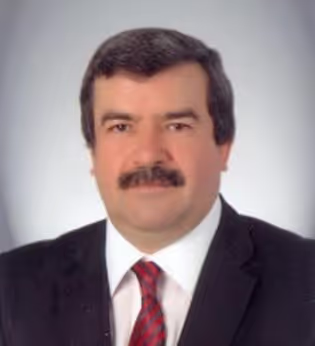
After graduating from Kırşehir Education College and Gazi University's Faculty of Education, he completed his master's degree in Special Education at the University of Warwick in England and his doctoral programme at Oxford Brookes University. He returned to Türkiye in 2000. Since 2001, he has been serving as the head of the special education department and the chair of the main scientific discipline in the department he established. Prof. Dr. Hakan SARI has published numerous books, book chapters, research articles, and reports both in Türkiye and abroad. He has represented our country at many international conferences. In line with this goal, he continues to contribute to education in Türkiye by training students at the undergraduate, master's, and doctoral levels in both special education and other fields. Additionally, after successfully completing his duties as advisor to the Ministry of National Education, General Director, and advisor to the President of the Higher Education Council (YÖK) during different periods in our country, he returned to his position at the university. He currently serves as the Department Chair and Head of the Department of Special Education at Necmettin Erbakan University. He continues to educate many successful individuals in the field of education in our country. Prof. Dr. Hakan SARI is married and has two children.
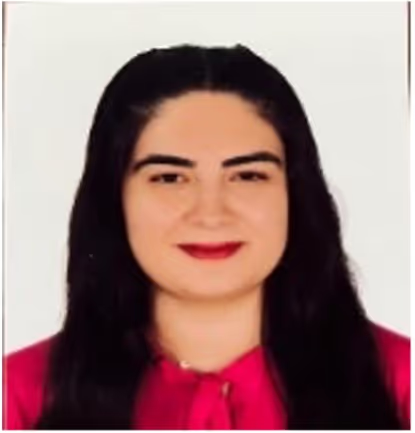
He completed his undergraduate and master's degrees in Guidance and Psychological Counselling at Necmettin Erbakan University. He is currently pursuing his doctoral studies in the Department of Special Education at the same university. He has been working as a Research Assistant in the Autism Spectrum Disorder Education Department of the Special Education Department at Necmettin Erbakan University since 2022. He has conducted academic research in the field of Special Education.
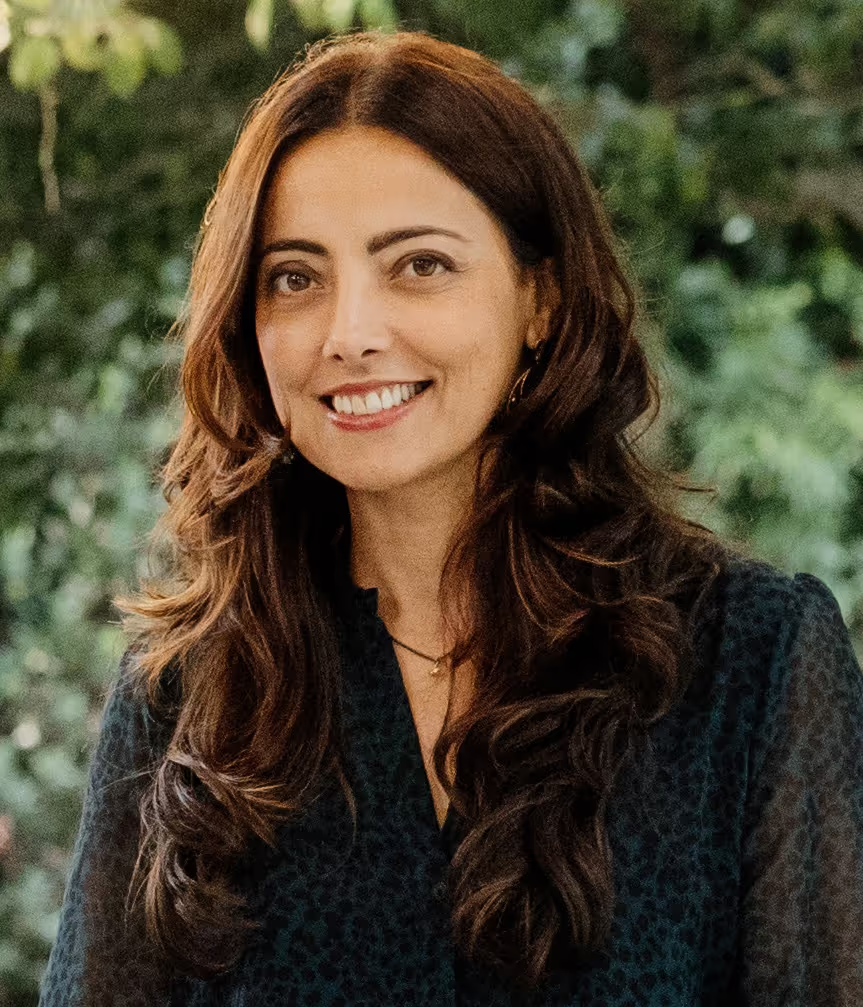
Ivone Duarte is an Associate Professor with Habilitation at the Department of Community Medicine, Health Information, and Decision Sciences, Faculty of Medicine, University of Porto. She earned her undergraduate degree in Psychology, followed by a Master’s and a PhD in Bioethics at FMUP. Currently, she is a core researcher in the ManEthics group at CINTESIS@RISE, focusing on ethical dimensions in healthcare. She is a founder of the Portuguese Association of Bioethics. She organizes since 2007 the International PhD Program on Bioethics, a partnership between the Faculty of Medicine of the University of Porto, the Federal Council of Medicine (Brazil) and the International Chair in Bioethics. She is a member of the Ethics Committee of the Faculty of Medicine of the University of Porto, and a member of the Ethics Committee of the University of Porto.
She is a member of the Governing Council and Head of the Ph.D. on Bioethics Department of the International Chair in Bioethics. Coordinator since 2018 of the Winter School and Summer School organized by the Department of Community Medicine, Information, and Health Decision at the Faculty ofMedicine of the University of Porto.
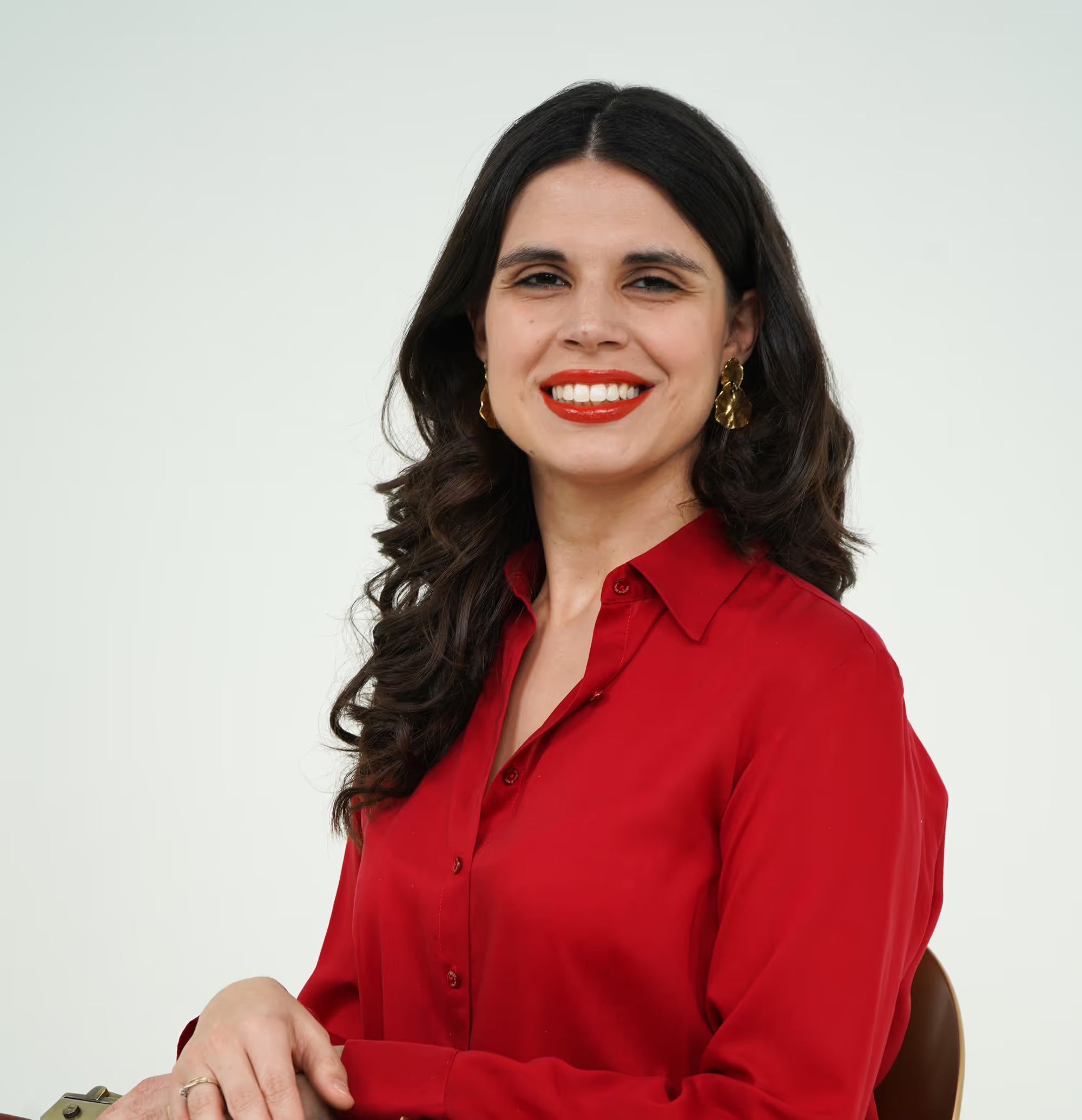
PhD in Medicine and Assistant Professor at the Faculty of Medicine of the University of Porto since 2020, integrating the Department of Community Medicine, Information and Decision-Making in Health (MEDCIDS). Full member of the Bioethics Center of FMUP since 2023. CINTESIS@RISE researcher. Medical specialist in General and Family Medicine at the Santo António Local Health Unit (2020-2024). Coordinator of General and Family Medicine and the Family Unit at CUF Porto Hospital. Corresponding academic of the National Academy of Medicine of Portugal since 2025.
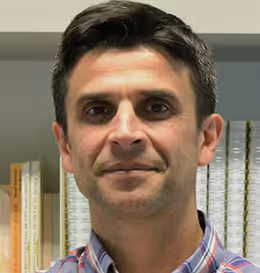
Alberto Freitas is an Associate Professor with Habilitation at MEDCIDS, Faculty of Medicine, University of Porto, and a senior researcher at RISE-Health, where he leads the newly established research group Digital Health and Clinical Simulation. He has extensive experience in health data science and digital health, having coordinated numerous projects and authored over 200 publications indexed in the Web of Science (H-index: 27). His research interests include digital health, health data science, data mining, machine learning, and data quality.
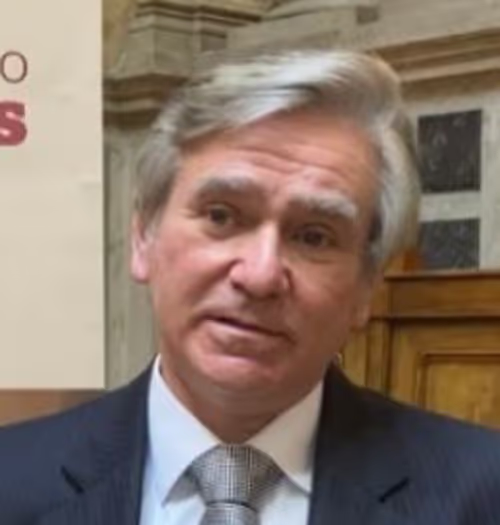
M.D., Vice-President of National Academy of Medicine (Portugal), has a Ph.D. in Bioethics in 1996. He is the Head of the International Chair in Bioethics (link) and the President of the 17th World Conference in Bioethics, Medical Ethics & Health Law (link) Concerning his professional activity, he is a Full Professor of Bioethics at the Faculty of Medicine of the University of Porto, the Director of the Center for Bioethics, and the President of the Ethics Committee of this Faculty. He is Director of the Master's and Ph.D. Course on Bioethics since 1998, Director of the Master's and Ph.D. Course on Palliative Care since 2009, and Director of the Post-graduation Course in Hospital Management since 2006. He is a member of the National Council of Ethics for Life Sciences (Portugal). He was President of the Regulatory Authority of Health the first independent healthcare regulatory agency created in Portugal. He was a member of the board of the European Health Management Association and of the International Society for Priorities in Health. He organized many seminars, congresses, and workshops. He has published 30 books and more than 300 full papers. His last publication is “Healthcare as a Universal Human Right: Sustainability in Global Health, Routledge, New York, 2022”. (link)
In the last two years, he was specially dedicated to the ethical questions of Artificial Intelligence. He was the coordinator of the White Book on Ethics and Artificial Intelligence of the National Council of Ethics for Life Sciences (Portugal) and he presented this White Book at the 33rd Meeting of the National Ethics Councils in Brussels and other European cities as well as in Buenos Aires, Brasilia, and Mumbai.
Andreia Sofia da Costa Teixeira is an Assistant Researcher at FMUP (MEDCIDS) and an integrated member of RISE-Health.
She holds a PhD in Computer Science (2012) and develops research in machine learning, statistical modeling, and clinical decision support.
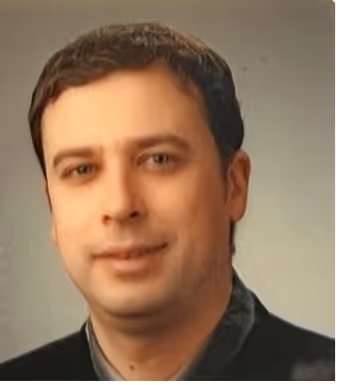
Helder Morgado is an Invited Assistant at at the Faculty of Medicine of the University of Porto and an integrated member of RISE-Health. He is currently a PhD student developing research on architectural planning guidelines that promote physical, emotional, and spiritual well-being in palliative care settings.
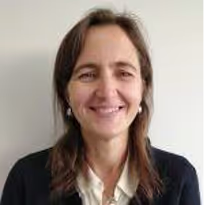
Maria Luísa Castro Guedes, PhD in Applied Mathematics, is an Assistant Professor at the School of Medicine and Biomedical Sciences (ICBAS) and an integrated researcher at RISEHEALTH, Biodata group.
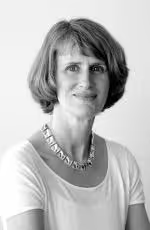
Professor Pierrette Bouillon has been teaching at the Faculty of Translation and Interpreting (FTI) at the University of Geneva since 2007. She is currently the Dean of the FTI and Director of the Department of Translation Technology (D-TIM). Her research focuses on natural language processing, including lexical semantics, speech-to-speech machine translation (especially in the medical field), and accessibility. She has led or participated in several national and European projects, such as MEDSLT, REGULUS, CALL-SLT, ACCEPT, and BabelDr. She currently leads various projects on automatic translation, subtitling, and accessibility of digital content, including PROPICTO, RC-NUM, PASSAGE, and UNI-ACCESS.
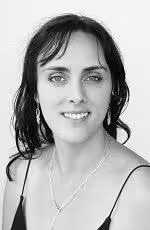
Dr. Irene Strasly is a specialized translator (legaland economic translator) and an Italian Sign Language interpreter. At the FTIshe coordinated the integration of Swiss French and Swiss Italian signlanguages into the Bachelor (Ba) in Multilingual Communication and launched thefirst Diploma of Advanced Studies (DAS) for Deaf translators in French- andItalian-speaking Switzerland in 2022. Her current research focus centres onaccessibility with a focus on health accessibility for deaf patients.

Texto que contextualize. Notícia?
Lorem ipsum dolor sit amet, consectetur adipiscing elit. Suspendisse varius enim in eros elementum tristique. Duis cursus, mi quis viverra ornare, eros dolor interdum nulla, ut commodo diam libero vitae erat. Aenean faucibus nibh et justo cursus id rutrum lorem imperdiet. Nunc ut sem vitae risus tristique posuere.

Texto que contextualize. Notícia?
Lorem ipsum dolor sit amet, consectetur adipiscing elit. Suspendisse varius enim in eros elementum tristique. Duis cursus, mi quis viverra ornare, eros dolor interdum nulla, ut commodo diam libero vitae erat. Aenean faucibus nibh et justo cursus id rutrum lorem imperdiet. Nunc ut sem vitae risus tristique posuere.

Texto que contextualize. Notícia?
Lorem ipsum dolor sit amet, consectetur adipiscing elit. Suspendisse varius enim in eros elementum tristique. Duis cursus, mi quis viverra ornare, eros dolor interdum nulla, ut commodo diam libero vitae erat. Aenean faucibus nibh et justo cursus id rutrum lorem imperdiet. Nunc ut sem vitae risus tristique posuere.

Texto que contextualize. Notícia?
Lorem ipsum dolor sit amet, consectetur adipiscing elit. Suspendisse varius enim in eros elementum tristique. Duis cursus, mi quis viverra ornare, eros dolor interdum nulla, ut commodo diam libero vitae erat. Aenean faucibus nibh et justo cursus id rutrum lorem imperdiet. Nunc ut sem vitae risus tristique posuere.

Texto que contextualize. Notícia?
Lorem ipsum dolor sit amet, consectetur adipiscing elit. Suspendisse varius enim in eros elementum tristique. Duis cursus, mi quis viverra ornare, eros dolor interdum nulla, ut commodo diam libero vitae erat. Aenean faucibus nibh et justo cursus id rutrum lorem imperdiet. Nunc ut sem vitae risus tristique posuere.
Lorem ipsum dolor sit amet, consectetur adipiscing elit. Suspendisse varius enim in eros elementum tristique.
Lorem ipsum dolor sit amet, consectetur adipiscing elit. Suspendisse varius enim in eros elementum tristique.
Lorem ipsum dolor sit amet, consectetur adipiscing elit. Suspendisse varius enim in eros elementum tristique. Duis cursus, mi quis viverra ornare, eros dolor interdum nulla, ut commodo diam libero vitae erat. Aenean faucibus nibh et justo cursus id rutrum lorem imperdiet. Nunc ut sem vitae risus tristique posuere.
Lorem ipsum dolor sit amet, consectetur adipiscing elit. Suspendisse varius enim in eros elementum tristique. Duis cursus, mi quis viverra ornare, eros dolor interdum nulla, ut commodo diam libero vitae erat. Aenean faucibus nibh et justo cursus id rutrum lorem imperdiet. Nunc ut sem vitae risus tristique posuere.
Lorem ipsum dolor sit amet, consectetur adipiscing elit. Suspendisse varius enim in eros elementum tristique. Duis cursus, mi quis viverra ornare, eros dolor interdum nulla, ut commodo diam libero vitae erat. Aenean faucibus nibh et justo cursus id rutrum lorem imperdiet. Nunc ut sem vitae risus tristique posuere.
Lorem ipsum dolor sit amet, consectetur adipiscing elit. Suspendisse varius enim in eros elementum tristique. Duis cursus, mi quis viverra ornare, eros dolor interdum nulla, ut commodo diam libero vitae erat. Aenean faucibus nibh et justo cursus id rutrum lorem imperdiet. Nunc ut sem vitae risus tristique posuere.
Lorem ipsum dolor sit amet, consectetur adipiscing elit. Suspendisse varius enim in eros elementum tristique. Duis cursus, mi quis viverra ornare, eros dolor interdum nulla, ut commodo diam libero vitae erat. Aenean faucibus nibh et justo cursus id rutrum lorem imperdiet. Nunc ut sem vitae risus tristique posuere.
Lorem ipsum dolor sit amet, consectetur adipiscing elit. Suspendisse varius enim in eros elementum tristique. Duis cursus, mi quis viverra ornare, eros dolor interdum nulla, ut commodo diam libero vitae erat. Aenean faucibus nibh et justo cursus id rutrum lorem imperdiet. Nunc ut sem vitae risus tristique posuere.
Lorem ipsum dolor sit amet, consectetur adipiscing elit. Suspendisse varius enim in eros elementum tristique. Duis cursus, mi quis viverra ornare, eros dolor interdum nulla, ut commodo diam libero vitae erat. Aenean faucibus nibh et justo cursus id rutrum lorem imperdiet. Nunc ut sem vitae risus tristique posuere.
Lorem ipsum dolor sit amet, consectetur adipiscing elit. Suspendisse varius enim in eros elementum tristique. Duis cursus, mi quis viverra ornare, eros dolor interdum nulla, ut commodo diam libero vitae erat. Aenean faucibus nibh et justo cursus id rutrum lorem imperdiet. Nunc ut sem vitae risus tristique posuere.
Lorem ipsum dolor sit amet, consectetur adipiscing elit. Suspendisse varius enim in eros elementum tristique. Duis cursus, mi quis viverra ornare, eros dolor interdum nulla, ut commodo diam libero vitae erat. Aenean faucibus nibh et justo cursus id rutrum lorem imperdiet. Nunc ut sem vitae risus tristique posuere.
Lorem ipsum dolor sit amet, consectetur adipiscing elit. Suspendisse varius enim in eros elementum tristique. Duis cursus, mi quis viverra ornare, eros dolor interdum nulla, ut commodo diam libero vitae erat. Aenean faucibus nibh et justo cursus id rutrum lorem imperdiet. Nunc ut sem vitae risus tristique posuere.
Nulla vel sodales tellus, quis condimentum enim. Nunc porttitor venenatis feugiat. Etiam quis faucibus erat, non accumsan leo. Aliquam erat volutpat. Vestibulum ac faucibus eros. Cras ullamcorper gravida tellus ut consequat.
Nulla vel sodales tellus, quis condimentum enim. Nunc porttitor venenatis feugiat. Etiam quis faucibus erat, non accumsan leo. Aliquam erat volutpat. Vestibulum ac faucibus eros. Cras ullamcorper gravida tellus ut consequat.
Lorem ipsum dolor sit amet, consectetur adipiscing elit. Suspendisse varius enim in eros elementum tristique. Duis cursus, mi quis viverra ornare, eros dolor interdum nulla, ut commodo diam libero vitae erat. Aenean faucibus nibh et justo cursus id rutrum lorem imperdiet. Nunc ut sem vitae risus tristique posuere.